
Last updated October 16, 2026
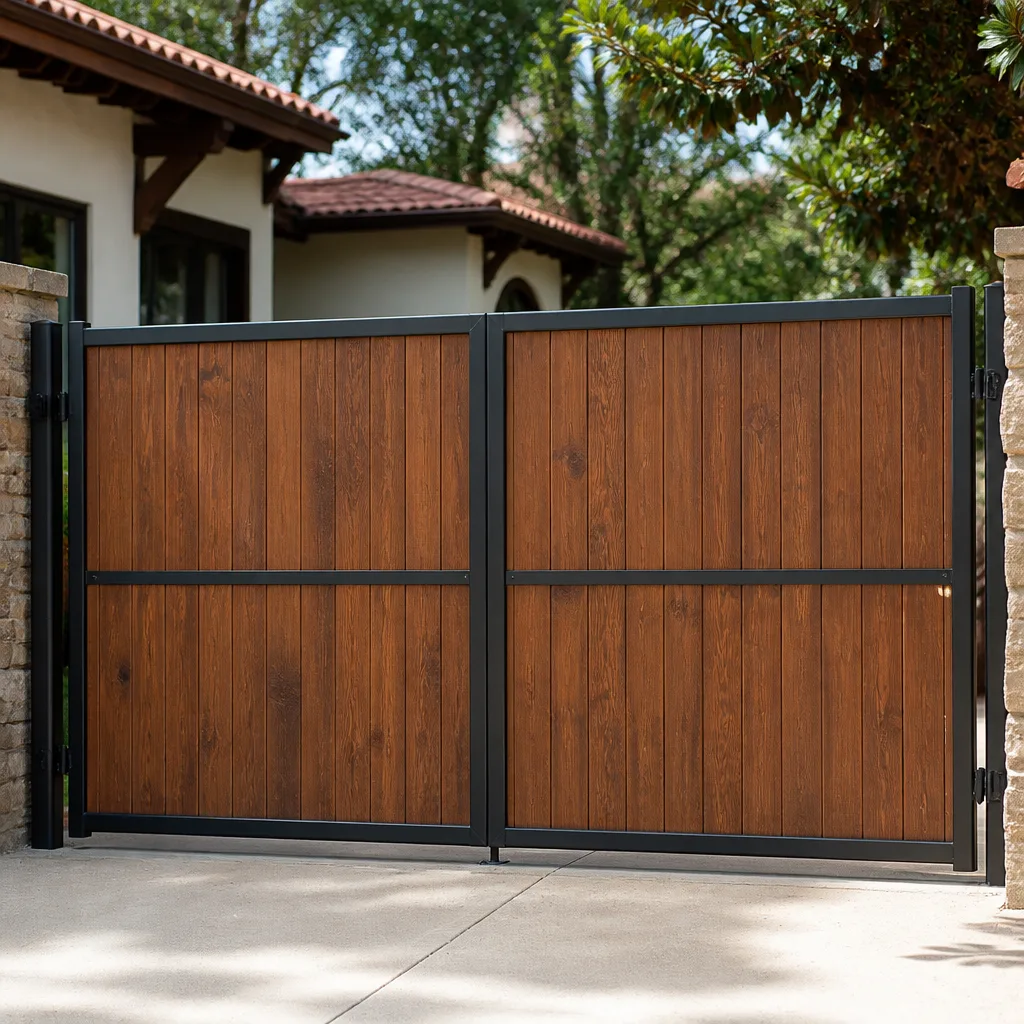 Wood & steel frame
 Sliding driveway gates
Free on-site gate assessment - hinges, posts, and your LiftMaster or Nice gate operator checked before anything is quoted
The assessment is free and the quote is the invoice.
Get your free estimateSeasonal Gate Repair Care for San Antonio: Year-Round Homeowner’s Guide
February is the most dangerous month for gate openers in San Antonio, and it’s not even close. A freeze-thaw cycle that lasts only 48-72 hours can crack a control board that ran flawlessly through five brutal summers. Most homeowners discover the damage the morning they need to leave for work, staring at a gate that won’t budge. This guide breaks down gate care around San Antonio’s actual climate calendar: the UV hammer of July, the January freeze window, and the two shoulder seasons that are genuinely the best time for preventive work. For a deeper dive, see The Complete Guide to Gate Repair in San Antonio.
Styles & brands we work with
Quick Answer
Seasonal gate maintenance in San Antonio means scheduling preventive service twice a year: once in March before the UV and heat stress of summer, and once in October before the brief but real freeze risk of January and February. The most important tasks are testing your opener’s force settings, lubricating hinges with a dry lubricant, and inspecting the battery backup before the freeze window, not during it.
Table of Contents
- San Antonio’s Real Climate Calendar for Gate Owners
- January-February: The Freeze Window That Catches Everyone Off Guard
- June-August: UV, Heat, and the Duty Cycle Problem
- March-May: Hail, Wind, and the Hill Country Storm Corridor
- The Shoulder Seasons: Why March and October Are the Best Months to Work on Your Gate
- Month-by-Month Gate Maintenance Checklist for San Antonio
- What Seasonal Gate Maintenance Costs in San Antonio
- Common Mistakes to Avoid
- When to Call a Professional
- Frequently Asked Questions
- The Bottom Line
San Antonio’s Real Climate Calendar for Gate Owners
San Antonio doesn’t have four equal seasons. It has a prolonged UV summer that starts in May and holds through September, a brief but genuine freeze window from mid-January through mid-February, and two shoulder periods, March to April and October to November, when the weather cooperates with gate maintenance. Most generic gate care guides are written for places with real winters and mild summers, which means they tell you to winterize in November and worry about snow load. That advice doesn’t translate here. What translates is understanding which components fail in which conditions, and when each failure is most likely to hit.
Here’s the climate overlay that matters for your gate:
| Window | Peak Risk Factor | Most Vulnerable Gate Component | What to Do |
|---|---|---|---|
| Late Jan – Mid Feb | Freeze-thaw cycling, 20°F nights | Control board, battery backup, limit switches | Test backup battery, verify manual release, check for condensation in the control box |
| March – April | Hail, wind gusts from storm cells | Gate panels, hinge welds, photo-eye alignment | Post-storm visual inspection, hinge tightening, realign sensors |
| May – June | First hard UV stretch, humidity ramp | Weather seals, plastic housing, gate arm bushings | Clean and inspect seals, apply UV protectant where needed |
| July – August | Sustained 95°F+ heat, peak UV | Opener motor, transformer, circuit board capacitors | Reduce duty cycle during hottest hours, check for overheating |
| September | Residual heat, rain from tropical systems | Electrical connections, ground-level boxes | Check for water intrusion after storms, test all functions |
| October – November | Moderate temps, low humidity | Everything (the maintenance window) | Full preventive service: lubricate, test, adjust, replace worn parts |
| December | First cold fronts, sudden temperature drops | Battery performance, cold-weather motor strain | Run a full cycle test on the coldest morning you can find |
In our experience working on gates across San Antonio, from Alamo Heights to Stone Oak to Helotes, the pattern is consistent: homeowners who schedule work in March and October rarely have a gate failure during the two high-stress windows. The ones who call us at 7 a.m. on a February morning when the gate won’t open are almost always the ones who skipped the fall shoulder season.
January-February: The Freeze Window That Catches Everyone Off Guard
San Antonio hits 32°F or below an average of 16 times per winter, with the coldest nights clustering in January and February. That’s not a long freeze by northern standards, but it’s long enough to do real damage. The problem in San Antonio isn’t the cold itself. It’s the speed of the swing: a day that starts at 28°F and reaches 65°F by afternoon puts every material in your gate system through a rapid expansion-contraction cycle. Solder joints on control boards are the first casualty. Capacitors are the second.
Here’s the pre-freeze preparation that actually matters for San Antonio gates:
- Test the battery backup before the first freeze. Most gate openers have a backup battery rated for a specific temperature range, and many manufacturer ratings assume operation above 32°F. A battery that tests at 85% capacity in October may deliver only 50% at 25°F, or fail to deliver enough amperage to cycle the gate at all. If your opener is a Viking or Ghost Controls model, the battery is typically accessible behind a front panel and should be load-tested, not just voltage-tested, before January. A voltmeter reading won’t tell you what the battery can deliver under load when the gate arm is fighting cold-stiffened grease.
- Verify the manual release now, not during the ice storm. Every automatic gate has a manual release mechanism, usually a keyed cylinder or pull chain. If you’ve never used it, February 3 at 6:45 a.m. with ice on the ground is the wrong time to figure it out. Stand at the gate, locate the release, and practice disengaging and re-engaging the opener. If the release is stiff, frozen, or missing a key, fix that in November or December.
- Check the control box for condensation. San Antonio’s winter humidity combined with cold nights creates condensation inside weatherproof control boxes, especially on gates in shaded lots or near creeks. Open the box on a dry day and look for moisture, white residue, or corrosion on the board. If you see any, dry it out and address the gasket or seal that let the moisture in.
- Insulate only what manufacturers allow. Some homeowners wrap control boxes or motors in insulation to protect against cold. This can be helpful for a short freeze window, but it can also trap condensation during the warm afternoon that follows, which causes more damage than the cold itself. If you insulate, use a breathable material and remove it once the freeze passes. Better yet, ask a technician whether your specific opener model needs it. Many DoorKing and Elite units are already rated for the temperatures San Antonio rarely drops below.
If your gate won’t open on a cold morning, check whether it’s the opener or the gate itself. A gate that’s frozen to the ground or has ice in the track needs thawing before the opener tries to move it. Forcing the opener against a frozen gate is how you burn out a motor or strip a gear in about 15 seconds. If the gate swings freely manually but won’t move under opener power, that points to an electrical or battery issue. That’s where Gate Repair professionals come in for diagnosis.
June-August: UV, Heat, and the Duty Cycle Problem
San Antonio averages 17 days per year at or above 100°F, and most of those land in July and August. Your gate opener has a duty cycle: the maximum amount of time per hour it can run before the motor needs to cool down. Most residential openers are rated for intermittent use, not continuous cycling. On July afternoons when the opener is already heat-soaked from sitting in direct sun, that duty cycle shrinks. If your gate is used heavily, say seven or eight cycles in an hour because landscapers, delivery drivers, and family members are all coming and going, you can overheat a motor that never complained in October.
How to tell if your opener is undersized for a South Texas summer:
- Thermal overload trips. The opener shuts down mid-cycle, then works again after 20-30 minutes of rest. That’s the thermal protection doing its job. It means the motor is running too hot.
- Sluggish movement in the afternoon. A gate that opens normally at 8 a.m. but moves slowly at 3 p.m. is telling you the motor is struggling against heat-expanded metal and heat-degraded lubricant.
- Transformer hum or burnt smell. A hot opener often hums louder than normal. Any burnt electrical smell means stop using the gate and get it checked. That’s a fire risk, not just an inconvenience.
- Capacitor issues on opener startup. Start capacitors help the motor kick on. Heat degrades capacitors faster than any other component in the opener. If the opener clicks or buzzes but doesn’t start on the hottest days, the start capacitor is a likely culprit. This is one of the most common repairs we see on Elite and DoorKing units after a hard San Antonio summer.
What you can do in July and August:
Reduce unnecessary cycles during peak heat. If possible, run the gate fewer times between 2 p.m. and 6 p.m. on the hottest days. This isn’t always practical, but even small reductions help.
Provide shade if you can. A shade sail or strategically placed tall plants can lower the surface temperature of an opener housing by 15-20 degrees in direct sun. Don’t box the opener in, that traps heat, but shade itself helps.
Check the lubricant. Heat thins some lubricants and turns others gummy. Gates that worked smoothly all spring sometimes bind up in August because the grease has broken down. Use a dry lubricant on hinges and moving parts. Wet greases attract dust and grit in San Antonio’s dry summer conditions, which turns into a grinding paste.
If your gate is heavily used at a commercial property or a home with multiple drivers and frequent deliveries, the summer heat test is when an undersized opener reveals itself. A residential-grade opener pushed hard through a San Antonio summer may need replacement with a higher-duty-cycle unit. That’s a conversation worth having in March, before the heat hits, rather than in the middle of July when you’re waiting on a part.
March-May: Hail, Wind, and the Hill Country Storm Corridor
San Antonio sits on the edge of the Hill Country storm corridor, which means March through May brings the hail and straight-line wind events that roll down from the Edwards Plateau. These storms do three things to gates: they dent or damage gate panels with hail, they knock photo-eyes and sensors out of alignment with wind-driven debris, and they stress hinge welds with sudden lateral pressure on the gate leaf. A gate that faces north or northwest takes the brunt of these systems.
After any significant hail or wind storm, run this post-storm inspection:
- Check the photo-eyes. Photo-eyes are the small sensors near the bottom of the gate frame that detect obstructions. Wind-blown dirt, leaves, or hail can shift them just a few degrees, and that’s enough to make the gate refuse to close. Look for a blinking or solid red light on the sensor itself. If it’s misaligned, the gate may reverse or stop for no visible reason.
- Inspect the gate leaf for new dents or deformation. Large hail can dent a steel gate panel. More importantly, repetitive wind pressure can bow the gate leaf or crack a weld where the leaf meets the hinge. Run your hand along the top and bottom rails and look for fresh rust forming in hairline cracks.
- Test the full open and close cycle twice. The first cycle tells you whether the gate functions at all. The second tells you whether something is intermittent. A gate that works once but stalls on the second cycle is likely developing an electrical or mechanical issue that the storm exposed.
- Clear debris from the track and rollers. If you have a sliding gate, wind storms push leaves, gravel, and dust into the track. A pebble in the wrong place will cause the gate to jump the track or strain the roller bearings. Clear the full length of the track, not just the section near the gate.
- Check the keypad and external controls. Hail can crack plastic keypad housings and allow water intrusion. Press every button and make sure the keypad is firmly attached. A cracked keypad left unaddressed in May becomes a dead keypad by September.
Most storm damage is visible if you look for it. The damage San Antonio homeowners miss is the small stuff: a photo-eye nudged two degrees out of alignment, a hinge with a hairline crack, a keypad seal that’s starting to split. Those become problems six months later when the weather shifts, and by then the repair is bigger than it needed to be.
The Shoulder Seasons: Why March and October Are the Best Months to Work on Your Gate
March and October are the two windows when the weather in San Antonio cooperates with gate maintenance. Temperatures sit between 60°F and 80°F. Humidity is moderate. Parts are typically in stock because the rest of the country isn’t in the middle of the same repair cycle. Technician availability is higher, and the work actually holds up better, because lubricants cure properly in moderate temperatures and adhesives bond correctly. Do the same job in July and the lubricant runs off the hinge before it ever sets up. Do it in January and the cold makes every metal part brittle and every adhesive sluggish.
Here’s what the March service should focus on:
- Full lubrication of all moving points. Hinges, rollers, gate arm bushings, and lock mechanisms. Use a dry lubricant that won’t turn into dust paste by June.
- Force setting adjustment. The opener’s force setting controls how hard it pushes or pulls the gate. After a San Antonio winter with temperature swings, force settings sometimes drift. An opener set too high can crush an obstruction; set too low, it reverses constantly. Adjust and test before the summer heat changes everything again.
- Battery check. Load-test the backup battery to confirm it’s still holding enough capacity to run the gate if the power goes out. Batteries degrade over time, and San Antonio summers age them fast.
And what the October service should cover:
- Same lubrication and adjustment pass. Do it before the freeze window, not during it.
- Condensation check in the control box. Address any signs of moisture before the cold nights arrive.
- Manual release verification. Test it now, find the problems now, fix them now. Not on the icy morning.
- Weather seal inspection. Replace any seals that cracked or dried out over the summer. Seals are cheap; control boards are not.
The advantage of the shoulder seasons is real and measurable. A March service visit catches the wear from winter before it becomes a July failure under heat load. An October visit prepares the gate for the one genuine cold stress San Antonio throws at it. Skipping both means you’re running a reactive maintenance strategy, which is how a $40 limit switch replacement becomes a $600 repair when the motor burns itself out trying to close against a misaligned sensor.
If any of this sounds like more than you want to tackle, Calder Gate Repair San Antonio home is where you can learn more about our approach. We’re a gate repair specialist, not a generalist handyman service.
Month-by-Month Gate Maintenance Checklist for San Antonio
This is the full chronological checklist we recommend to every homeowner in San Antonio. It’s structured around the climate calendar above, not a generic four-season framework. Print it or save it to your phone. It takes about 10 minutes per month.
January
- Test the manual release. If it’s stiff, frozen, or you can’t find the key, fix it now.
- Load-test the backup battery.
- Wipe down the photo-eyes with a clean cloth. Winter dust and moisture leave a film.
February
- Check the control box interior for condensation, especially after any freeze cycle.
- Listen for unusual motor noise on cold mornings. A grinding or straining sound is a warning.
- Verify the gate moves freely by hand when disengaged, especially after the first hard freeze.
March
- Schedule the spring preventive service or do a full DIY pass: lubricate, adjust force settings, test battery, inspect welds.
- Inspect for hail damage if any spring storms have already rolled through.
- Clean the track thoroughly if you have a sliding gate.
April
- After any storm, run the full post-storm checklist from the section above.
- Check keypad housings for cracks and water intrusion.
- Apply UV protectant to any plastic housing components if your gate sits in direct sun all day.
May
- Start watching for heat-related sluggishness on hot afternoons.
- Verify the force settings still work correctly as temperatures climb.
- If the opener has ever tripped thermal overload, note the outdoor temperature and time of day when it happens.
June
- Reduce cycles during the hottest hours if practical.
- Check lubricant hasn’t thinned out or run off the hinges.
- Inspect for water intrusion if any early tropical moisture pushed through.
July
- Watch for thermal overload trips between 2 p.m. and 6 p.m.
- Listen for transformer hum or a burning smell. Stop use immediately if you detect either.
- Test the gate early in the morning when it’s cool, and again in the afternoon. Note any difference in speed.
August
- Same as July, but also check the start capacitor if the opener ever clicks without starting.
- Clear dust and cobwebs from the motor housing. Dust insulates heat.
September
- After any tropical system, check ground-level electrical boxes for standing water.
- Test all functions: remote, keypad, manual release, safety sensors.
October
- Schedule the fall preventive service or do a full DIY pass.
- Verify manual release one more time while the weather is pleasant and the lock isn’t frozen.
- Replace any weather seals that cracked over the summer.
November
- Check the control box for moisture after the first real cold front.
- Confirm battery still tests well after cooler nights arrive.
- Clear any fall leaves that have accumulated in the gate track or around the opener.
December
- Run a full cycle test on the coldest morning of the month so far.
- Verify the gate reverses properly when the photo-eye beam is interrupted.
- If anything was questionable in October, fix it now. Don’t carry it into February.
What Seasonal Gate Maintenance Costs in San Antonio
Preventive maintenance is cheaper than almost every common gate repair. A seasonal service visit in San Antonio typically runs $95 to $180 depending on the gate type, opener brand, and whether parts are needed. Compare that to the $450 to $800 cost of replacing a control board after a freeze, or the $350 to $650 to replace a burnt-out motor after a summer of thermal overload trips. The math doesn’t lie.
Here’s what you can expect to pay for common seasonal gate service items in the San Antonio market:
- Seasonal maintenance visit (full service, no parts): $95-$180 per visit
- Gate opener repair, minor (limit switch, force adjustment, sensor realignment): $120-$250
- Control board replacement after freeze or surge damage: $450-$800 including parts and labor
- Backup battery replacement: $80-$200 depending on the opener brand and battery type
- Motor replacement after thermal overload damage: $350-$650 including parts and labor
- Track or roller repair after storm damage: $150-$400 depending on severity
These ranges reflect what we’ve seen across San Antonio neighborhoods, from Castle Hills to Cibolo, over recent years. The actual number on your quote depends on your specific gate, opener model, and access situation. What doesn’t change is this: Calder Gate Repair San Antonio gives every customer a written price before any work starts. The number on the invoice is the number you agreed to, not a surprise that shows up after the tech packs up and drives away. That’s how Gate Repair in San Antonio should work, and it’s how we do it.
If you’re looking at a $150 seasonal maintenance visit versus a potential $600 emergency repair in July, the preventive visit is the cheaper option almost every time. That’s the entire argument for the shoulder-season schedule in one sentence.
Common Mistakes to Avoid
- Testing the manual release for the first time during an ice storm. We’ve had homeowners call us in February in a panic because they couldn’t get their gate open manually during a freeze, and they’d owned the gate for four years without ever touching the release. It’s a two-minute check in October that saves a 45-minute problem in January.
- Using WD-40 on gate hinges. WD-40 is a water displacer, not a proper gate lubricant. It displaces the lubricant that’s already there and evaporates, leaving the hinge drier than before. Use a dry lube designed for metal-to-metal contact.
- Ignoring the force setting because it’s “working fine.” An opener’s force setting drifts over time. The danger isn’t just that the gate stops working, it’s that the gate keeps working while applying too much or too little force. Too much force and the gate can damage itself or something in its path. Too little force and the gate reverses constantly, which is a different kind of problem.
- Skipping the October service because the gate survived the summer. San Antonio’s freeze window is short but real. Gates that ran fine from March through September fail in January because the October work never happened. The freeze doesn’t care how well the gate handled the heat.
- Insulating the control box with whatever’s in the garage. Wrapping a control box in a towel or a plastic bag traps condensation and creates the exact conditions that kill control boards. If you’re going to protect against cold, use a breathable material and remove it when the freeze passes.
- Running the opener after a storm without checking the photo-eyes first. A misaligned photo-eye is the most common post-storm failure we see in San Antonio, and it’s often self-inflicted: the gate reversed, the homeowner thought the opener was broken, kept pressing the button, and stressed the whole system trying to force a close that the safety sensor was correctly preventing.
- Waiting until the opener smells like burning before calling anyone. A burnt smell from the opener means something has already failed or is failing. By the time you smell it, the repair is bigger than it needed to be. Listen for changes in motor sound, watch for changes in gate speed, and call before the smell happens.
When to Call a Professional
Some gate maintenance tasks are genuinely DIY-friendly: cleaning photo-eyes, clearing the track, checking the keypad for cracks, testing the manual release. Others cross the line into dangerous or expensive territory. If the gate opener hums but doesn’t move, the start capacitor or motor is likely involved, and that’s 120-volt or 240-volt territory. If the gate jumps the track, forcing it back on without realignment can damage the rollers, the track, and the opener all at once. If the control board shows signs of moisture or corrosion after a freeze, an improper repair can damage the board permanently. For these situations, a trained professional is the right call. Calder Gate Repair San Antonio offers free estimates in San Antonio, call (361) 314-4803. Every repair includes the 365-Day Done Right Promise: if the repair fails within 365 days, we come back at no charge and make it right. That’s stated in writing on every job.
Frequently Asked Questions
Twice a year: once in March before the summer heat and UV stress, and once in October before the winter freeze window. These are the two shoulder seasons when temperatures are moderate, parts are typically in stock, and the work holds up correctly. For most San Antonio homes, this schedule prevents the majority of failures we see.
A seasonal maintenance visit in San Antonio typically costs $95 to $180 per visit when no parts are needed. Minor repairs like limit switch replacement or sensor realignment typically run $120 to $250. Larger repairs like control board replacement after freeze damage run $450 to $800. Call (361) 314-4803 for an exact quote, estimates are free and the price is written before any work starts.
Basic tasks like cleaning photo-eyes, clearing debris from the track, testing the manual release, and checking the keypad for cracks are safe for most homeowners. Anything involving the opener motor, control board, force settings, or electrical connections should be handled by a professional. Working on a gate opener’s electrical system without proper training is dangerous and can permanently damage the unit.
Calder Gate Repair San Antonio is factory-familiar with nine major gate opener brands, including LiftMaster, FAAC, BFT, Linear, Viking, Ghost Controls, DoorKing, Elite, and Mighty Mule. If your San Antonio home has a gate opener from any of these brands, a Calder technician has likely worked on dozens of the same model. For Gate Opener Repair in San Antonio, this is the deep multi-brand familiarity that matters when a repair needs to be exactly right.
First, don’t force the opener against a frozen gate. That burns out the motor in seconds. Disengage the manual release and check whether the gate swings freely by hand. If it does, the problem is electrical or in the opener itself, and you need a professional diagnosis. Calder Gate Repair San Antonio answers every call with a live person, 24/7, so you can get someone on the phone when it’s 7 a.m. and your gate won’t open.
Yes. Electric gate repair is a core service. This covers the opener, the control board, safety sensors, keypads, and all the electrical components that turn a manual gate into an automatic one. For Electric Gate Repair in San Antonio, Calder technicians diagnose the specific failure and give you a written price before touching a single bolt, no surprises on the invoice afterward.
The Bottom Line
San Antonio’s climate does specific, predictable things to gates. The UV summer strains motors and degrades lubricants. The brief February freeze window cracks control boards and exposes dead backup batteries. The March and October shoulder seasons are the windows where preventive work happens reliably and actually holds. Service your gate in March and October, run the quick monthly checks in between, and you’ll avoid most of the emergency repairs San Antonio homeowners call about at the worst possible moments. If something does break, Calder Gate Repair San Antonio answers the phone with a live person, gives you a written price before work starts, and backs every repair with the 365-Day Done Right Promise. For more guides & resources, visit our blog.
Written by Nico Alvarez, Owner at Calder Gate Repair San Antonio, serving San Antonio since 2009.
See the difference
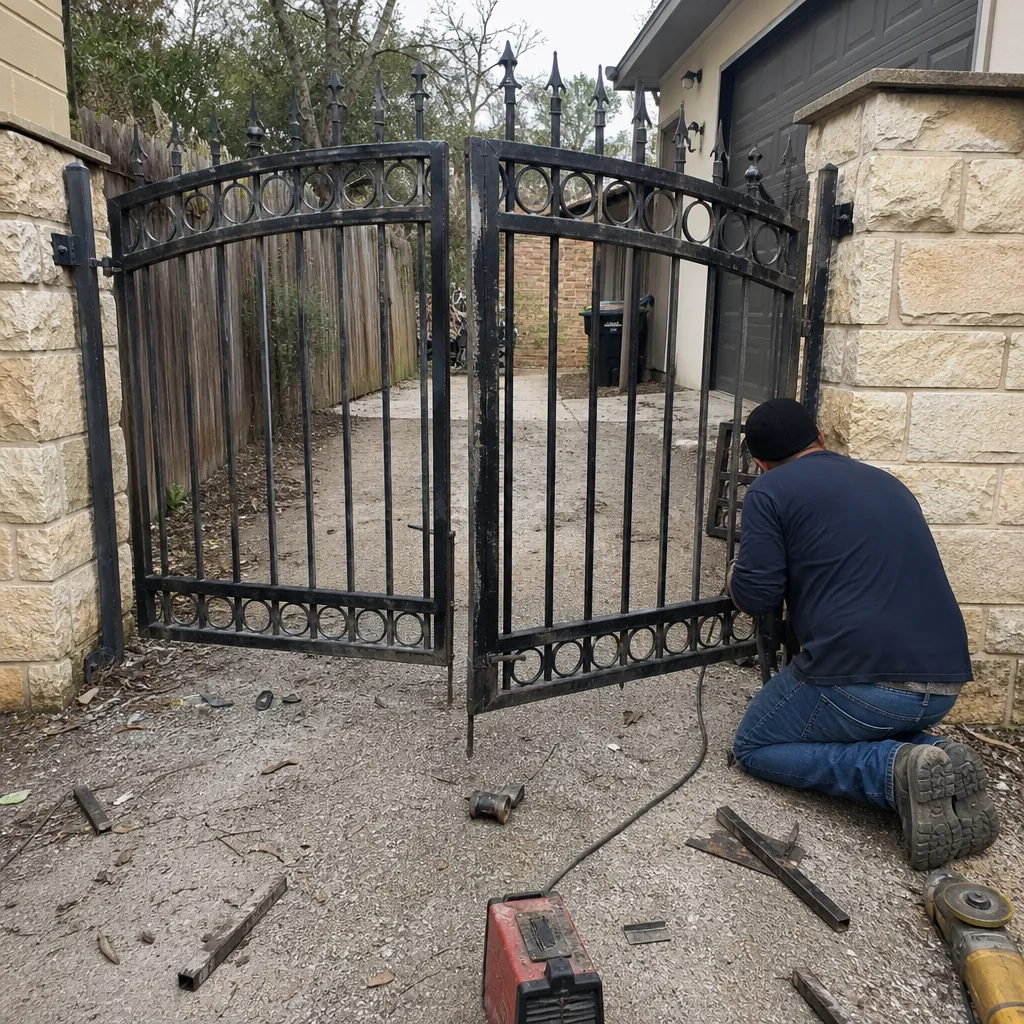 Before
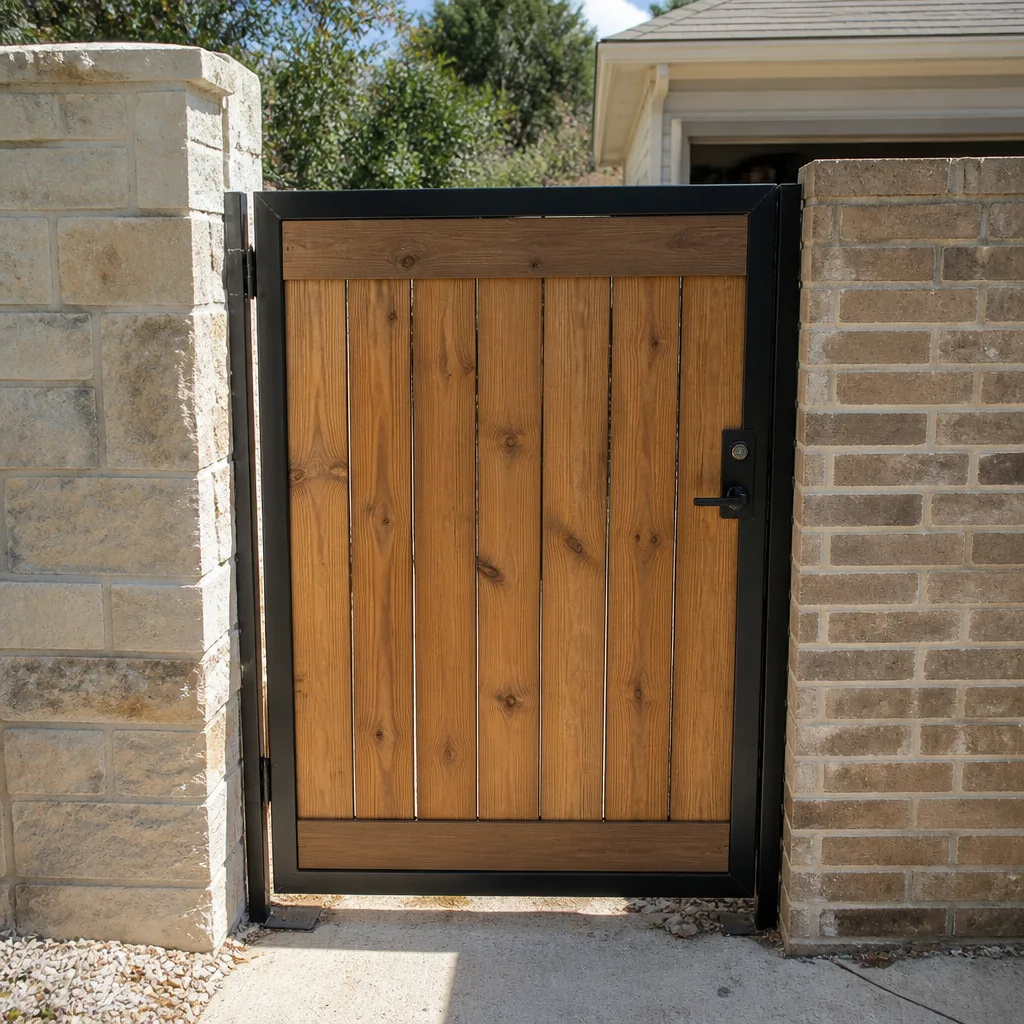 After
After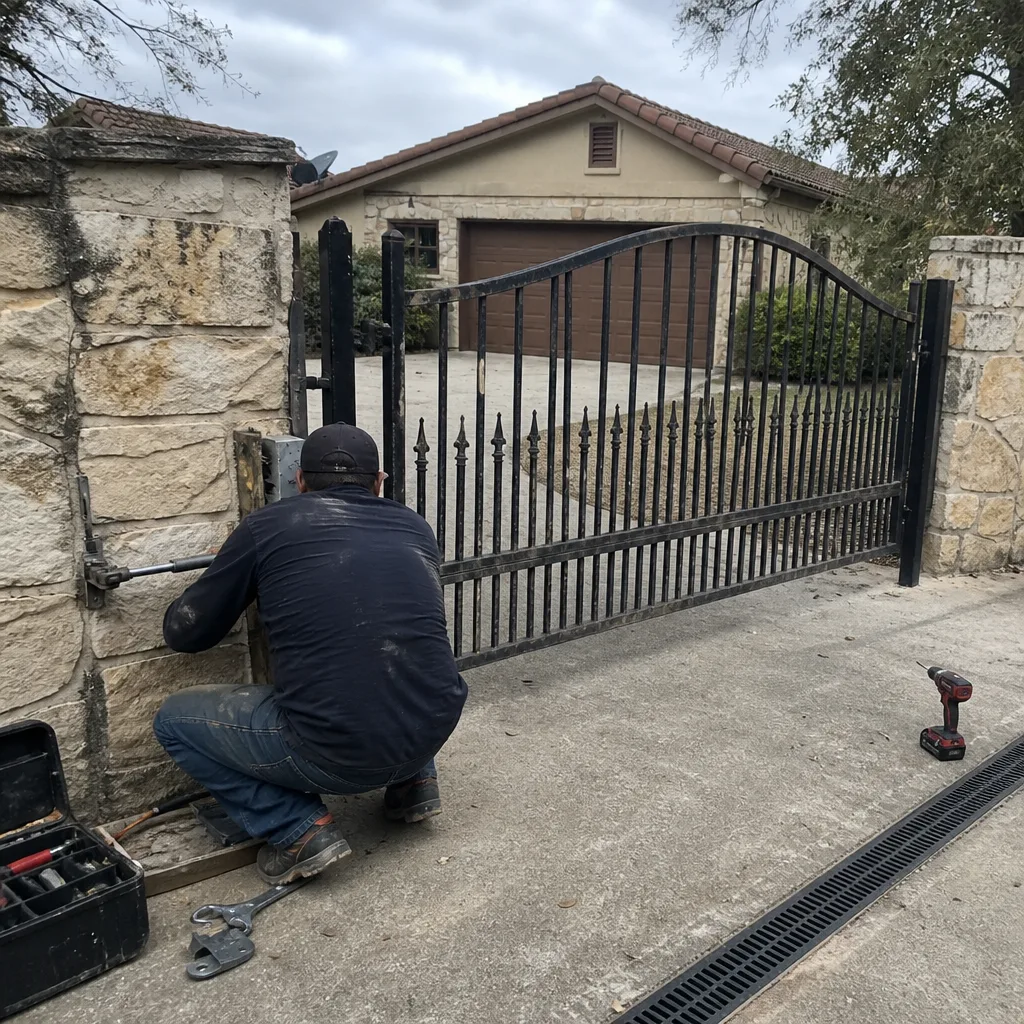 Before
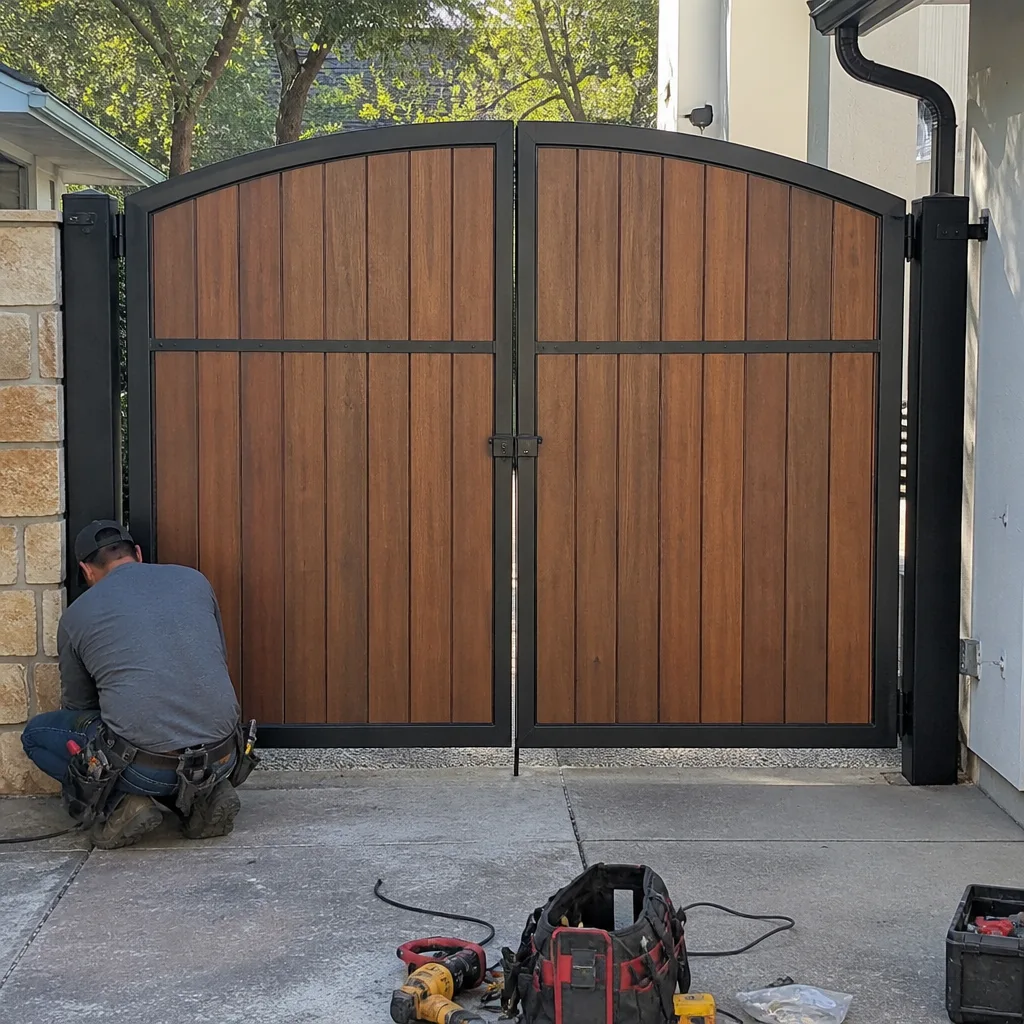 After
After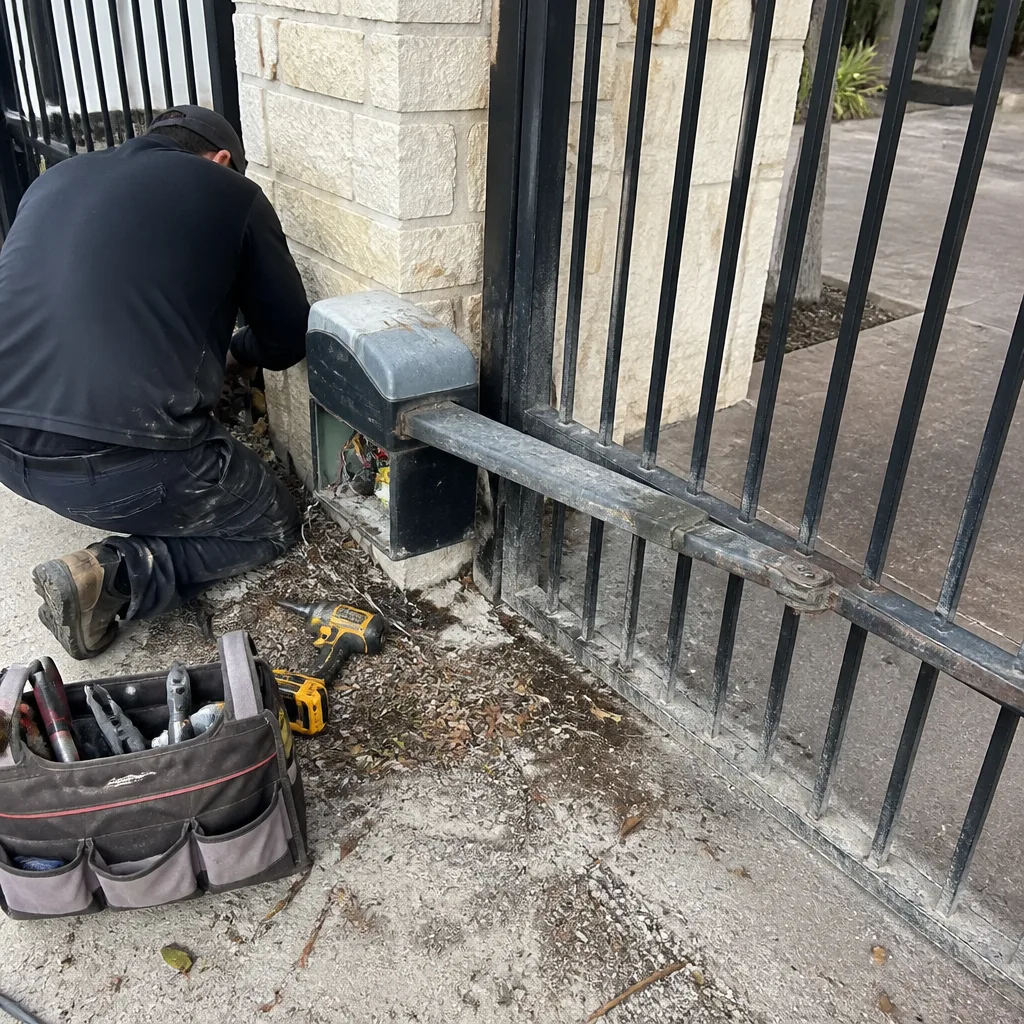 Before
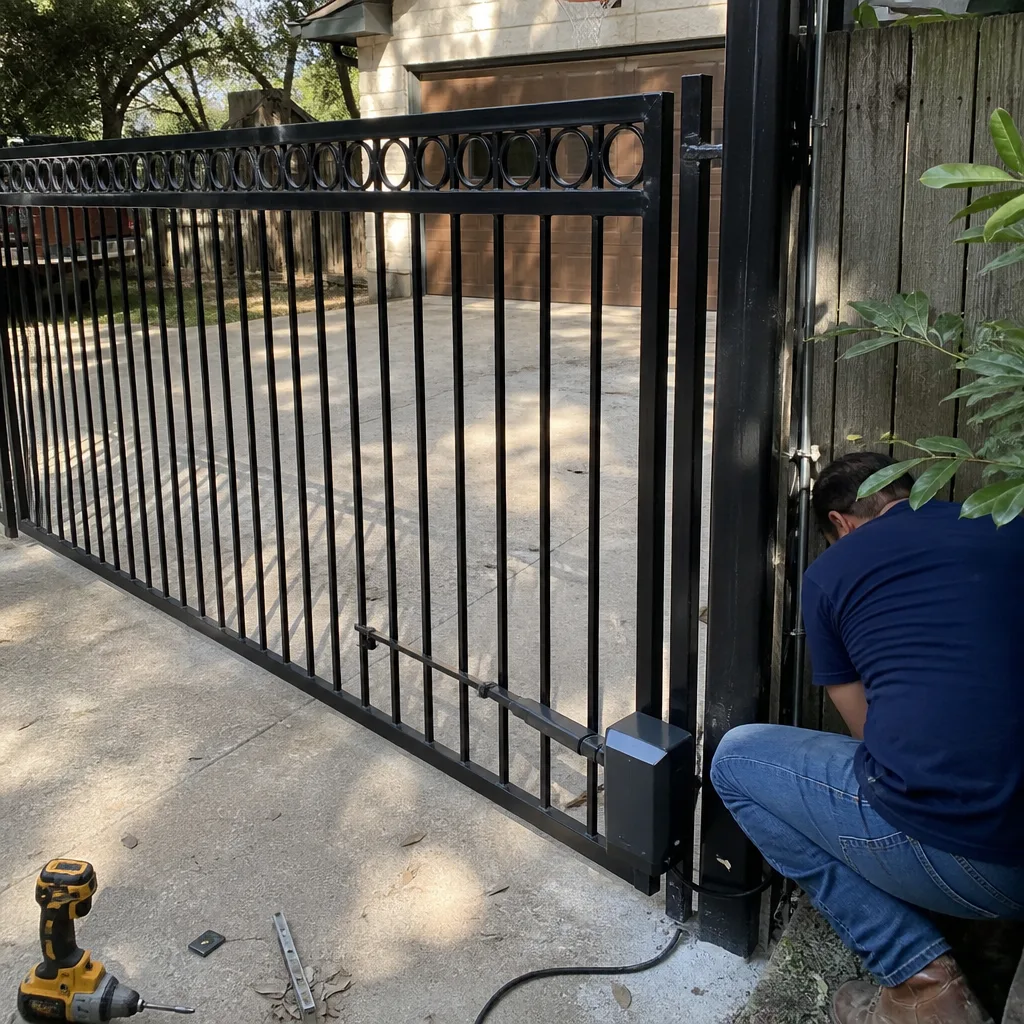 After
After