
Last updated October 16, 2026
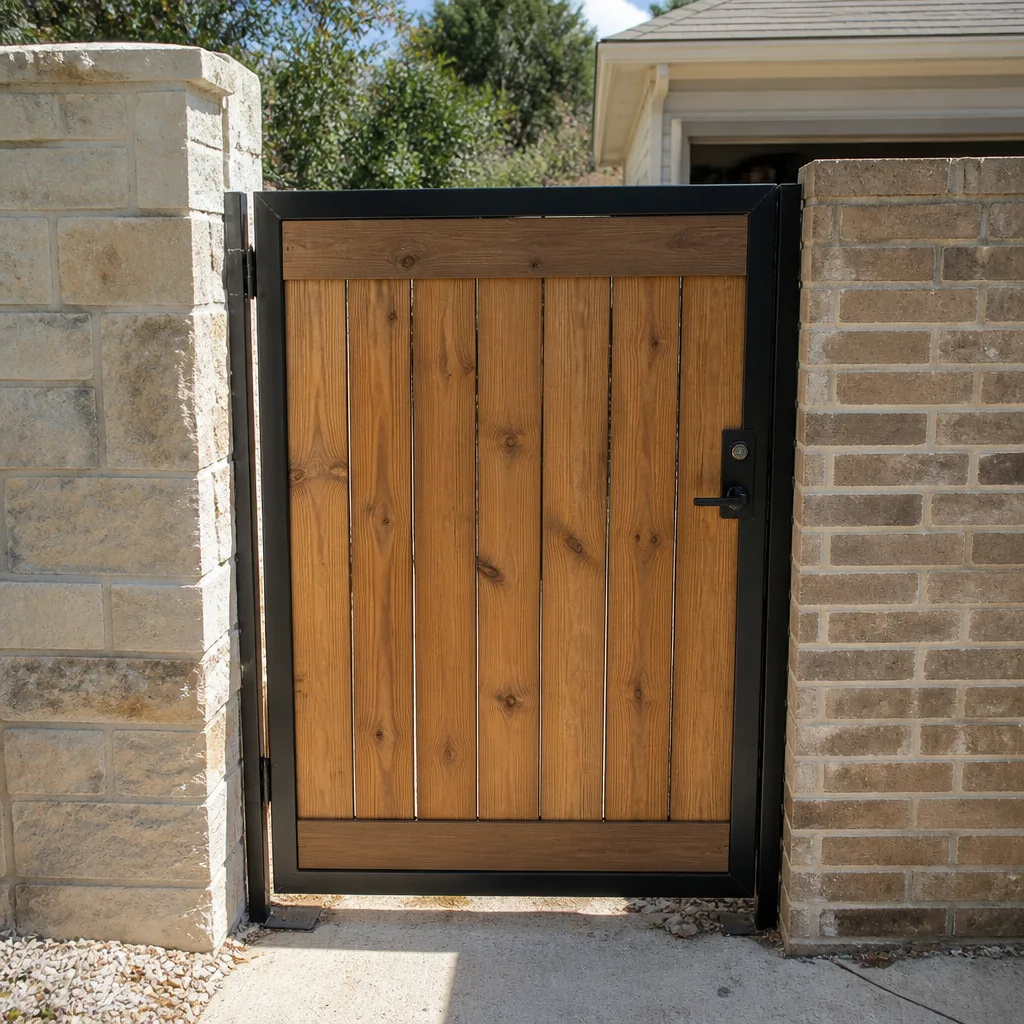
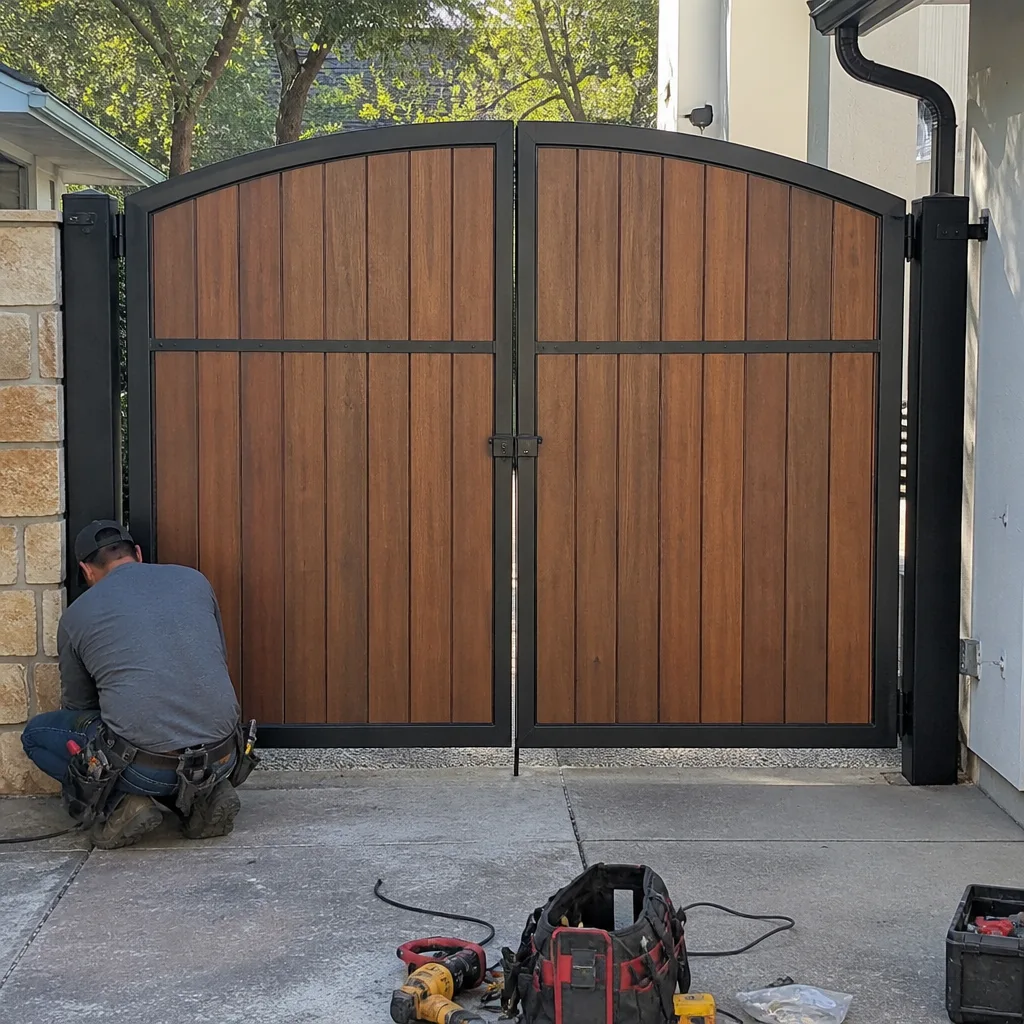
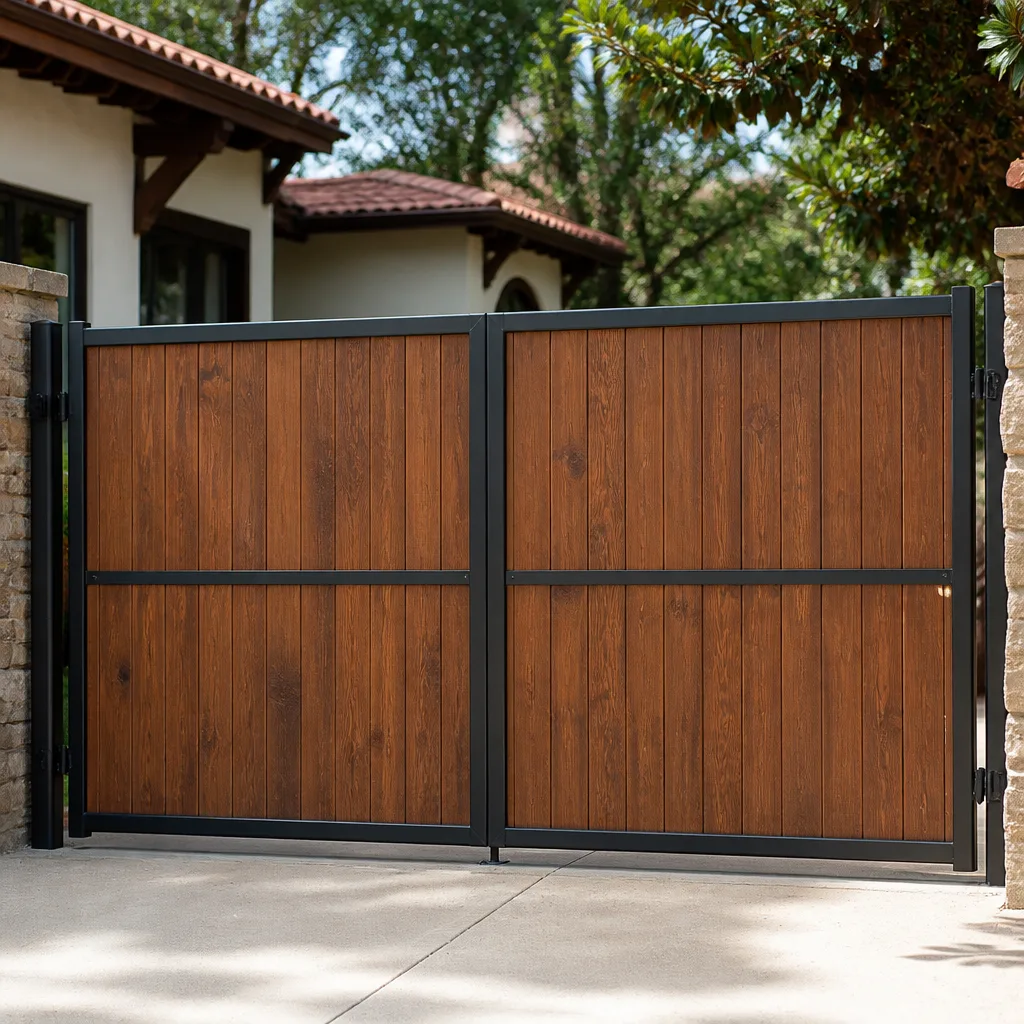 Wood & steel frame
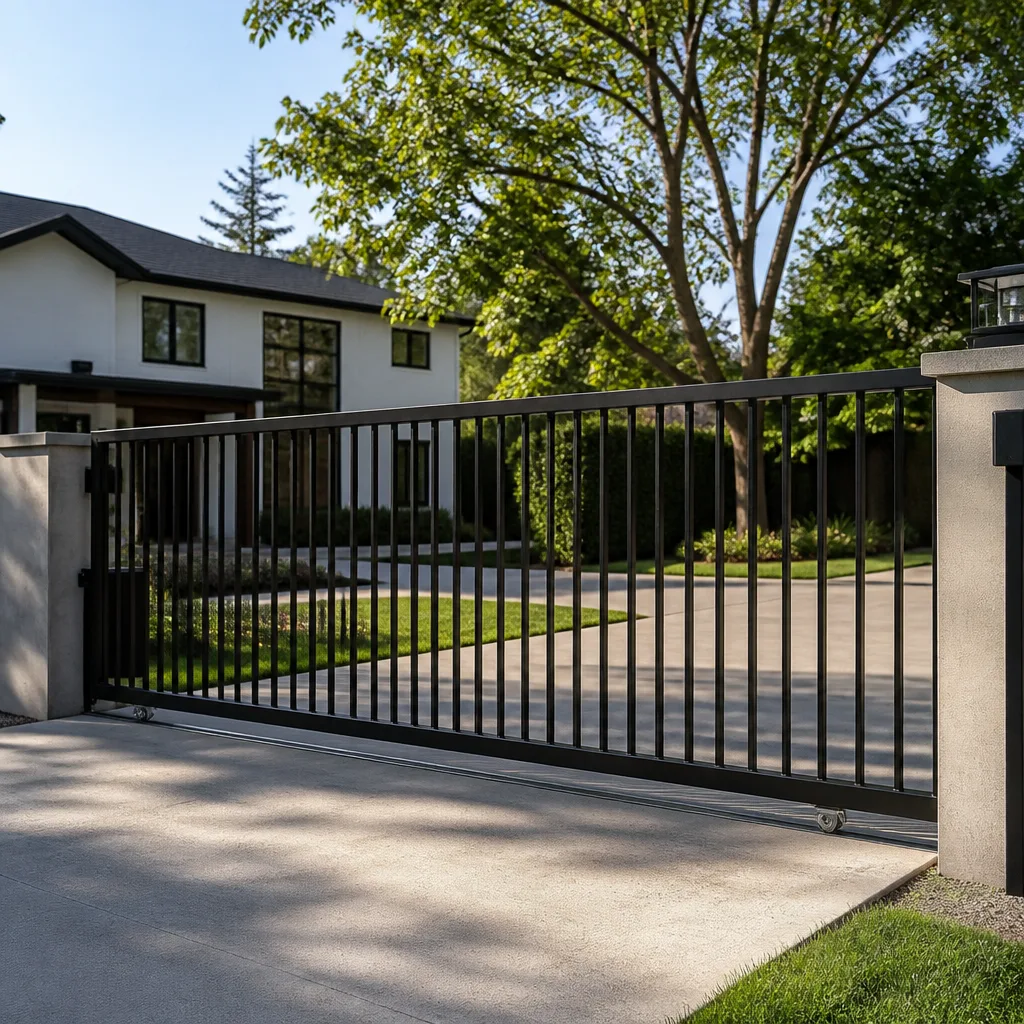 Sliding driveway gates
Free on-site gate assessment - hinges, posts, and your LiftMaster or Nice gate operator checked before anything is quoted
The assessment is free and the quote is the invoice.
Get your free estimateThe Complete Guide to Gate Repair in San Antonio
San Antonio’s summer ground temperatures can exceed 150°F at the surface. That’s hot enough to warp a steel gate track in a single season, crack PVC sleeves around posts, and bake the grease out of a gearbox until it seizes. Yet most “complete guides” to gate repair never mention thermal expansion, caliche soil movement, or the way a Stone Oak HOA covenant can dictate what kind of hinge you’re allowed to install. This guide fixes that. You’ll learn how to diagnose the real problem behind a dragging gate, what nine major opener brands actually fail on in South Texas conditions, when to repair versus replace, and what a fair price looks like in San Antonio right now. For a deeper look at whether you should tackle issues yourself or bring in a pro, see our DIY vs Professional Gate Repair: The San Antonio Homeowner’s Decision Guide.
Quick Answer
Gate repair in San Antonio typically costs $145 to $680 depending on whether the problem is mechanical (hinges, wheels, track), electrical (opener board, sensors, wiring), or structural (post lean from caliche soil movement). Most common repairs are completed the same day, and the smart first step is a visual inspection of the gate’s movement without the opener engaged, because roughly 40% of “opener failures” are actually load problems caused by the gate itself. For an exact quote on your specific gate, call (361) 314-4803 and a real person will pick up, day or night.
Styles & brands we work with
Table of Contents
- How San Antonio’s Climate and Soil Actually Kill Gates
- The Symptom-to-Fix Decision Tree: Diagnose It Like a Tech
- Brand-by-Brand Failure Patterns: What We See in San Antonio
- Repair vs. Replacement: The Dollar Thresholds That Settle It
- HOA Gate Rules in Stone Oak, Alamo Ranch, and Cibolo Canyons
- What Gate Repair Costs in San Antonio (Real Numbers)
- How the Relay Visibility Guarantee Changes the Contractor Experience
- Common Mistakes to Avoid
- When to Call a Professional
- Frequently Asked Questions
How San Antonio’s Climate and Soil Actually Kill Gates
We’ve pulled openers off gates in Helotes, Shavano Park, and Terrell Hills that died for one reason: the gate frame pulled the opener’s arm out of alignment. Not a bad board. Not a fried capacitor. The gate moved, and the opener took the blame. Understanding why starts with the ground under your posts.
Caliche is a calcium carbonate hardpan that sits a few feet below much of San Antonio. It’s the reason foundation repair is a thriving industry here, and it does the same thing to gate posts. During wet spells, certain layers absorb water and swell. During droughts, they shrink and crack. A post set in concrete that sits on top of moving caliche will shift enough over two or three seasons to change the geometry of the entire gate by a half inch or more. That doesn’t sound like much until you realize the opener arm typically has less than three-quarters of an inch of tolerance before it starts binding.
Then there’s heat. A dark steel gate in direct sun on a 105°F day can reach 170°F at the surface. That heat expands the gate frame, changes wheel spacing friction, and softens plastic gear teeth inside openers. Cheap plastic gears inside an opener like a Mighty Mule or even a residential Linear will degrade faster in San Antonio than they would in Dallas or Houston, because sustained high heat plus mechanical load equals deformation.
Thermal expansion works on the track too. A steel V-track bolted to a concrete driveway can buckle upward in the middle if it was installed without expansion gaps. We see this most often in driveways facing west, where afternoon sun hits the gate and the track at the same angle for hours.
The takeaway: before blaming the opener, watch how the gate moves manually. If it drags, sticks, or rattles at one specific point, the opener is probably the victim, not the cause. Fixing the opener without fixing the gate load is the single most common way homeowners in San Antonio end up paying for the same repair twice.
If you’re not sure whether your problem is mechanical or electrical, our Gate Repair in San Antonio page walks through the diagnostic process step by step.
The Symptom-to-Fix Decision Tree: Diagnose It Like a Tech
Here’s the sequence we run on every service call. You can do most of this from your driveway in under ten minutes.
- Disconnect the opener. Pull the manual release (usually a red cord or lever on the opener carriage). Push the gate by hand. If it doesn’t glide smoothly, you have a mechanical problem: wheels, track, hinge, or post alignment. Stop looking at the opener.
- Watch the wheels at each post. If the gate sags toward one side, a wheel is probably crushed or the post has leaned. A crushed wheel on a sliding gate is often the first casualty of caliche-induced post shift.
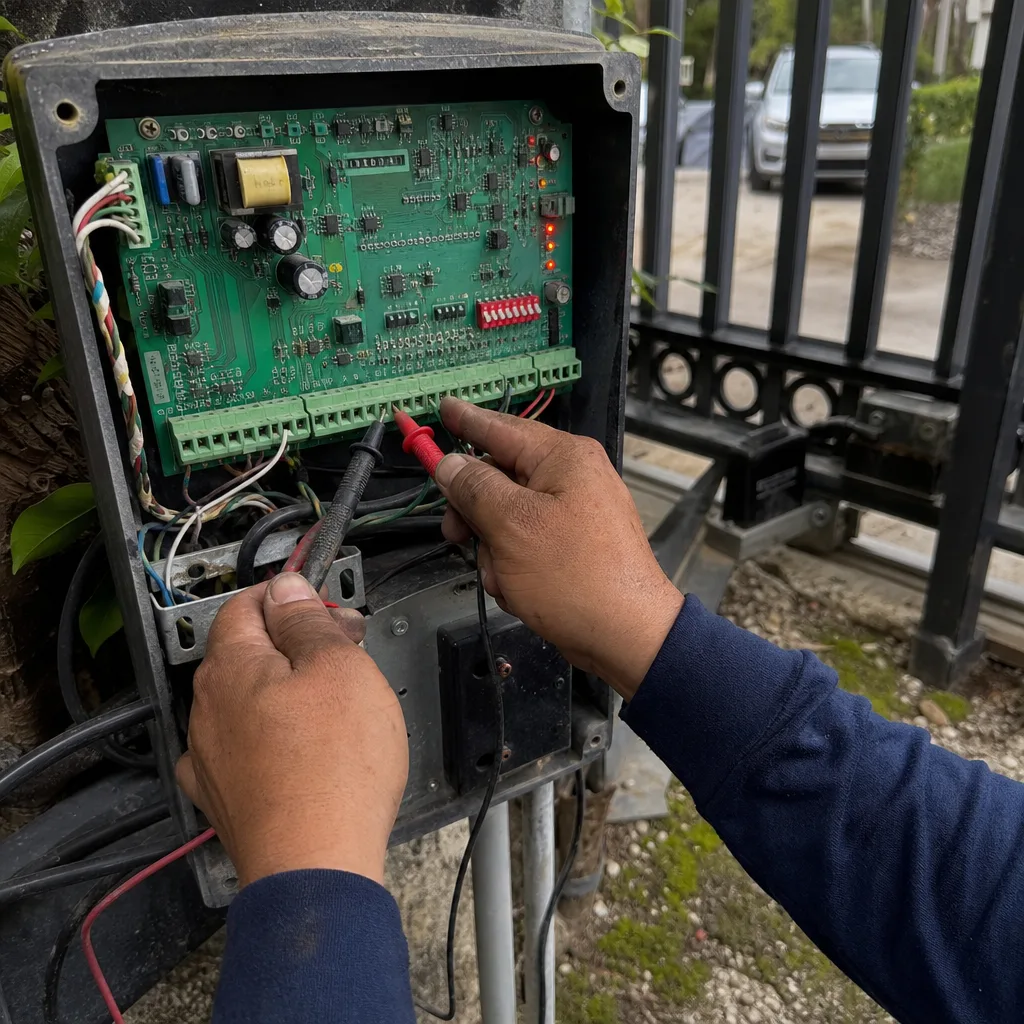
- Listen for the motor. If the motor hums but the gate doesn’t move, the capacitor is a common culprit in hot climates. If the motor clicks repeatedly without starting, suspect the control board’s relay.
- Check the safety edges and photo eyes. A gate that reverses immediately after starting, or refuses to close, often has a misaligned photo eye or a dirty safety edge contact. In San Antonio, dust and pollen from live oaks coat photo eye lenses within weeks.
- Inspect the limit switches. If the gate opens fully but then slams or grinds at the end of travel, the limit switches (the small sensors that tell the gate when to stop) are set wrong or have failed.
- Look at the keypad and remote response. If the gate works from the wall console but not the remote, the receiver antenna may be pinched or the remote battery is flat. If it doesn’t work from anything, the opener board likely needs replacement.
Run this checklist and you’ll know whether to call for a mechanical repair, an opener repair, or a full replacement before the tech even arrives. That saves you a diagnostic fee and makes you a smarter negotiator on price.
Brand-by-Brand Failure Patterns: What We See in San Antonio
Not all openers fail the same way. Here’s what we’ve observed across neighborhoods like Dominion, Elm Creek, and Braun Station, where gate styles and brands cluster by builder era.
Linear and Viking: The Builder-Grade Workhorses
Linear and Viking are the two brands we see most often on homes built between 2005 and 2018 in San Antonio. They’re decent machines, but they share a weak point: the plastic drive gear. After five to seven San Antonio summers, that gear wears into a smooth nub. Symptoms are a motor that runs but moves the gate in jerks, or a loud grinding noise. The repair is straightforward, and a quality replacement gear restores full function. We also see cap failures in both brands after brownouts and lightning strikes, which are common in spring storm season.
Ghost Controls: The DIY Favorite
Ghost Controls gained popularity because their openers are genuinely easy for homeowners to install, and they pair nicely with solar panels. In San Antonio, we see two recurring issues. First, the actuator arm loses its encoder position after power interruptions, causing the gate to stop mid-travel and flash an error. Second, the rubber O-rings inside the actuator dry out in our heat and let moisture in. If your Ghost Controls opener stops opening all the way after a storm, a reset usually fixes it; if it slogs and leaks oil, the actuator seals are done.
DoorKing: The HOA Standard
DoorKing is the brand most commonly specified by master-planned community HOAs in San Antonio, including neighborhoods with guardhouse or vehicular access gates. These are commercial-grade units built to run hundreds of cycles a day. Their failure mode is different: solder joints on the control board crack after years of sun-heat cycling, causing intermittent operation. A board repair or replacement is usually cheaper than replacing the whole opener, and a good tech will inspect the board before quoting you a new unit.
LiftMaster, FAAC, BFT, Elite, and Mighty Mule round out the brands we train on, and each has its own quirks too. The point is: brand matters. A tech who knows exactly which part tends to fail on a Viking versus a DoorKing gets your gate fixed faster and avoids unnecessary parts swapping.
If your opener brand isn’t listed here, check our Gate Opener Repair in San Antonio page for broader coverage.
Repair vs. Replacement: The Dollar Thresholds That Settle It
You don’t need an emotional argument about “investing in your home.” You need math. Here it is.
Pull out your last three repair invoices and total them. If the gate has cost you more than 50% of its replacement value in the last 24 months, stop repairing it. That’s the industry-standard threshold, and it applies to gates just like cars.
For a typical residential sliding gate in San Antonio, install costs range from $1,400 to $4,200 depending on length, material, and opener type. So if you’ve spent $700+ on repairs in two years, or a single repair quote comes in above $2,100, real math says replacement is the smarter move.
Other signals that replacement beats repair:
- Visible rust through the frame tubes. In San Antonio’s humidity swings, steel gates rust from the inside out. If you can tap a screwdriver through a spot, the structural integrity is gone.
- The gate sags more than two inches at the free end. This means either the frame is bent or the post has moved past the point of shimming.
- The opener is more than 12 years old and needs a board replacement. Replacement boards for old models can run $450 to $900. A new opener starts around $600 installed for a basic residential unit.
- Three or more wheels are worn unevenly. This indicates a systemic alignment problem that will keep chewing through wheels until you fix the underlying geometry.
- You’re repairing the same failure for the third time. That’s not a repair problem. That’s a design or installation problem. New gate time.
Here’s the honest version: a good gate tech will tell you when repair is throwing good money after bad. A great one shows you the math. Ask for the three-repair total rule and see how the tech responds.
HOA Gate Rules in Stone Oak, Alamo Ranch, and Cibolo Canyons
San Antonio’s master-planned communities don’t mess around with gate aesthetics. If you live in Stone Oak, Alamo Ranch, Cibolo Canyons, or similar neighborhoods, your HOA’s architectural control committee probably has specific rules about gate material, color, height, and even the type of opener arm you can install.
Stone Oak: Many Stone Oak HOAs require wrought-iron or steel tube gates in dark colors (black, bronze, or dark green). Some prohibit chain-link gates entirely, even for side yards. Gate openers must be mounted so they’re not visible from the street. That means top-mounted swing openers need a low-profile arm, and slide openers need a screened enclosure.
Alamo Ranch: Alamo Ranch has multiple subdivisions, each with its own HOA but generally consistent rules. Most require the gate to match the home’s exterior fencing style. If your fence is a specific stone or brick color, your gate posts may need to be clad in the same material.
Cibolo Canyons: This area has some of the strictest front-yard visibility standards in San Antonio. Swing gates that open outward onto a public sidewalk may be prohibited outright. Retrofitting an opener to a non-compliant gate can trigger a violation notice, so check your covenants before buying equipment.
What does this mean for repair? Two things. First, if your gate needs replacing, the replacement must meet current HOA specs, which may be stricter than the original builder spec. Second, some repairs require HOA approval if they change the gate’s appearance or operating mechanism. A knowledgeable local tech will flag this before ordering parts.
If your HOA has already flagged your gate, our Electric Gate Repair in San Antonio service can coordinate with your property manager to get the work done right.
What Gate Repair Costs in San Antonio (Real Numbers)
Here’s what we quote in San Antonio, in plain numbers. These are line-item ranges before parts, based on the work we do across Bexar County.
| Repair Type | Typical Cost Range | Notes |
|---|---|---|
| Diagnostic visit (if repair declined) | $65 – $95 | Waived if you approve the repair |
| Hinge replacement (per hinge) | $85 – $160 | Includes lubrication and alignment check |
| Wheel/roller replacement | $45 – $110 per wheel | Sliding gates usually need 2-4 |
| Track straightening or replacement | $180 – $520 | Depends on track length and material |
| Post re-shimming / stabilization | $200 – $450 | For caliche-related lean, not collapsed posts |
| Opener capacitor replacement | $75 – $140 | Most common quick fix in SA heat |
| Control board replacement | $350 – $780 | Varies by brand; DoorKing boards cost more |
| Safety photo eye replacement | $120 – $220 per pair | Also includes alignment |
| Full swing gate opener install | $950 – $2,400 | Includes arm, mounting, and setup |
| Full slide gate opener install | $1,100 – $2,800 | Includes chain or belt, gear box, and setup |
Most gate opener repairs in San Antonio run between $145 and $680 before parts. A full opener replacement with labor runs $1,000 to $2,400 on average for residential models. These numbers reflect San Antonio’s market specifically – local labor rates, local parts availability, and the realities of working on gates that have been through multiple Texas summers.
Every job we do includes a written price before any work starts. The number on the invoice is the number agreed to at the door, never a surprise. That’s not a sales pitch. It’s a stated policy, and it’s how we’ve operated since 2009 as part of the Relay Home Co. family.
How the Relay Visibility Guarantee Changes the Contractor Experience
Here’s what the typical gate repair experience looks like in San Antonio: you call, you leave a message, you wait for a callback. Eventually you get a four-hour window, take time off work, and wait. The tech shows up, does the work, and you get a handwritten invoice with a total that may or may not match what you discussed.
We built Calder Gate Repair to be the opposite of that.
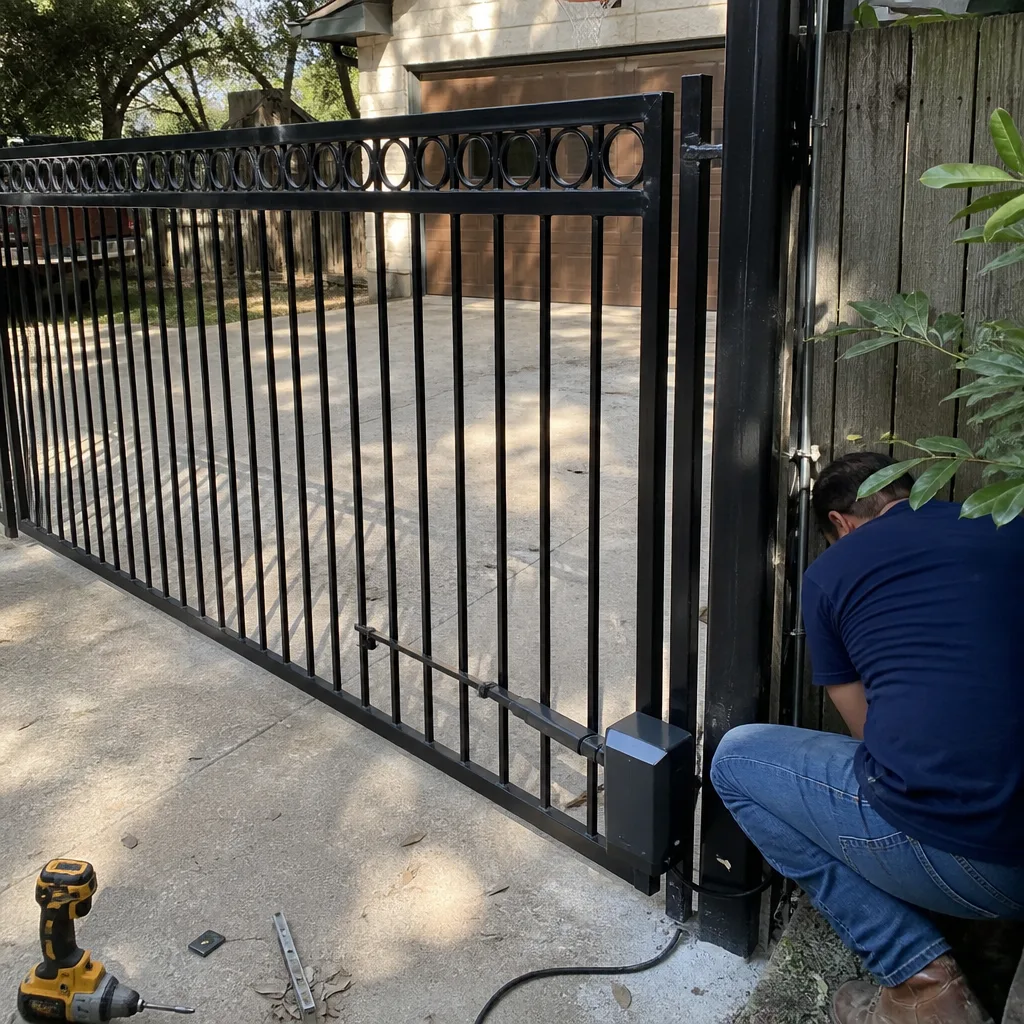
When we do an opener replacement or repair, this is what actually happens: you call (361) 314-4803 and a live person answers. Not a phone tree. You get a confirmed arrival time, and the tech’s ETA is trackable in real time, like a rideshare map. The tech arrives in uniform, shows ID, and walks you through the diagnosis before touching anything. We write the price down before we start. We take before and after photos so there’s a digital record of exactly what was done. When the job is finished, you pay from a link on your phone – no paper, no confusion.
That’s the Relay Standard, and it applies to every job, big or small. We also back every repair with the 365-Day Done Right Promise: if the repair fails within 365 days, Calder returns at no charge. Second visit is free, always. That’s in writing on every invoice we hand over.
Led by Nico Alvarez, our team is trained on nine major opener brands: LiftMaster, FAAC, BFT, Linear, Viking, Ghost Controls, DoorKing, Elite, and Mighty Mule. We explain gate trade terms in plain words (limit switch, capacitor, safety edge) before we ever ask you to approve a repair.
Ready to get your gate working? Start with our Calder Gate Repair San Antonio home page to see the full range of services.
Common Mistakes to Avoid
- Replacing the opener before checking gate load. If the gate doesn’t glide by hand, a new opener will fail the same way the old one did. Diagnose the gate first, then the opener.
- Ignoring post lean until the gate won’t close at all. Caliche soil shifts gradually, then suddenly. A gate that rubs today can fail to latch in three months. Shim the posts early.
- Buying the cheapest opener available online. A $289 swing opener with plastic internals may last two San Antonio summers. A mid-range Linear or Viking with metal gears will still be running in seven years.
- Forgetting HOA approval for visible changes. Replacing a gate with a different material or color in Stone Oak or Alamo Ranch can trigger a violation. Check the covenants first.
- Adjusting spring tension without experience. Gate springs on swing gates carry enormous loads. A spring that pops off under tension can cause serious injury. Call a professional for spring work.
- Using generic store-brand remotes instead of the right model. Some openers pair fine with universal remotes; others (looking at you, older DoorKing) need brand-specific transmitters. Using the wrong remote can corrupt the receiver memory.
- Putting off a noisy opener repair. That grinding noise is usually the drive gear eating itself. Another two weeks and the motor can overheat and burn out too, doubling the repair bill.
When to Call a Professional
Call a professional if your gate won’t move at all, reverses mid-travel, smells like burnt plastic near the opener, has visible sparks from the control box, or leans more than two inches at the free end. Also call if the gate was hit by a vehicle, even if it still opens – hidden stress cracks in weld seams fail later, often while the gate is moving. And never attempt spring or high-tension cable work yourself. The stored energy in a gate spring is enough to break fingers, wrists, or worse if it releases unexpectedly. Calder Gate Repair San Antonio offers free estimates anywhere in San Antonio – call (361) 314-4803 and we’ll send a background-checked tech with a live arrival time.
Frequently Asked Questions
Most gate repairs in San Antonio run between $145 and $680 before parts, depending on whether the issue is mechanical (hinges, wheels, track) or electrical (opener board, capacitor, sensors). A diagnostic visit typically costs $65 to $95 and is waived if you approve the repair. Call (361) 314-4803 for a free over-the-phone estimate based on your specific symptoms.
Yes. Most common opener repairs – capacitor replacement, gear swap, photo eye alignment, limit switch adjustment – are completed in a single visit, and we can usually schedule same-day service for urgent cases. On the day of service, you’ll get a live trackable arrival time, not a four-hour window.
Heat expansion is the usual culprit. Metal gate frames expand in direct sun, which increases friction at the hinges and wheels. Combined with grease that thins out or evaporates in 100°F+ heat, the gate can bind or drag. A summer tune-up that includes re-lubrication and wheel inspection typically solves it.
With regular maintenance, a quality residential gate opener lasts 8 to 12 years in San Antonio’s climate. Cheaper plastic-geared models may fail in 3 to 5 years due to sustained heat exposure. The single best longevity move is addressing gate mechanical problems early so the opener isn’t working against added friction.
Repairs that preserve the existing appearance and operation usually don’t require HOA approval. If the work changes the gate material, color, height, or opening direction, most Stone Oak, Alamo Ranch, and Cibolo Canyons HOAs require architectural committee review. We can help you determine what your specific covenants require.
A complete gate installation includes removing the old gate, setting and aligning posts or posts sleeves, mounting the new gate, installing the opener of your choice, running low-voltage wiring to the opener, installing safety photo eyes and safety edges, programming remotes and keypads, and testing the full auto-reverse system. We also provide a written price before any work starts and a printed copy of the 365-Day Done Right Promise. Call (361) 314-4803 to schedule a free measure and written quote.
The Bottom Line
Gate repair in San Antonio is a different animal than gate repair anywhere else in Texas. Caliche soil moves posts. Summer heat kills gears and capacitors. HOA covenants constrain what you’re allowed to install. A smart homeowner can self-diagnose most problems in ten minutes using the decision tree above, and will save real money by knowing whether the issue is mechanical or opener-related before calling a tech. For Gate Repair services that handle everything from caliche-shifted posts to heat-fried capacitors, make sure you choose a team that understands San Antonio’s unique conditions. When you do call, demand what the Relay Standard guarantees: a live person on the phone, a trackable arrival time, a written price before work starts, and a repair that’s backed for a full 365 days. Your gate is the first thing anyone sees when they visit your home. Make it work right, and make it count.
Written by Nico Alvarez, Owner at Calder Gate Repair San Antonio, serving San Antonio since 2009.
See the difference
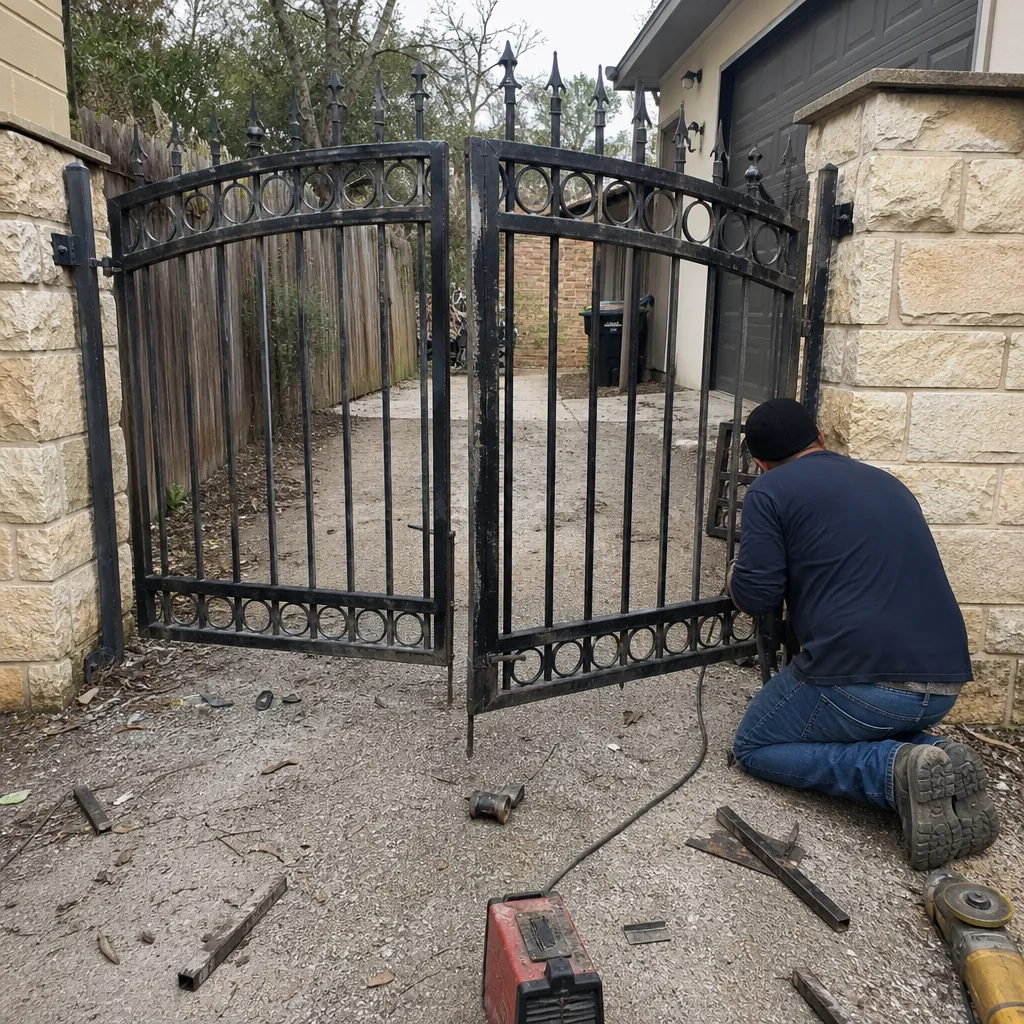 Before
 After
After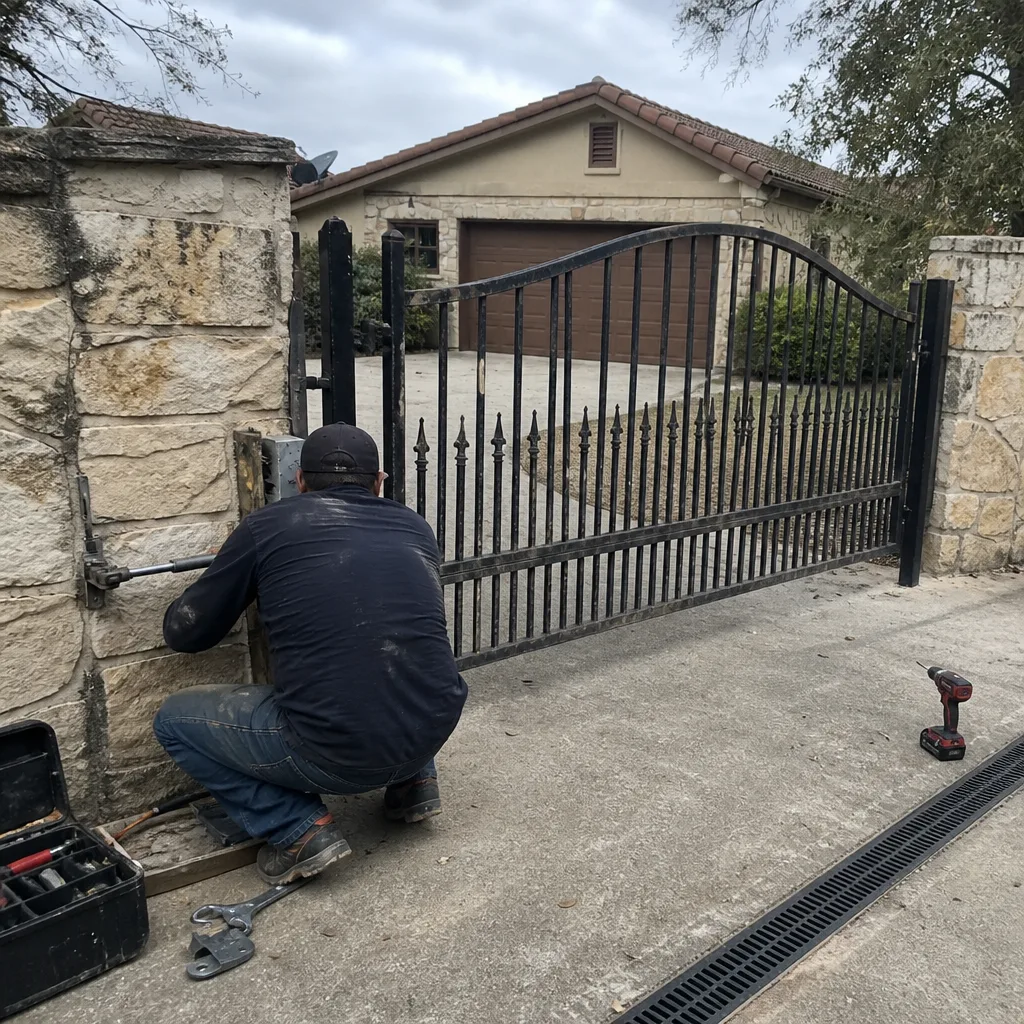 Before
 After
After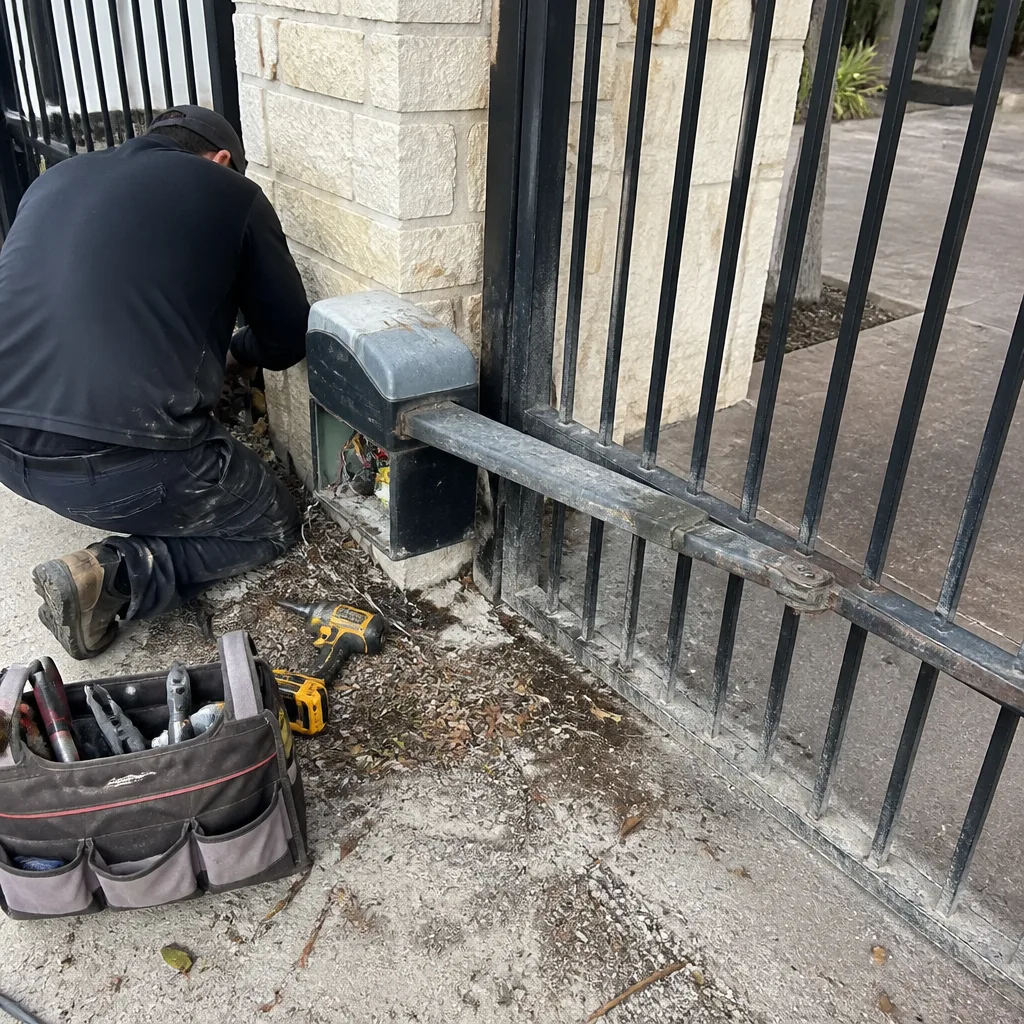 Before
 After
After