
Last updated October 16, 2026
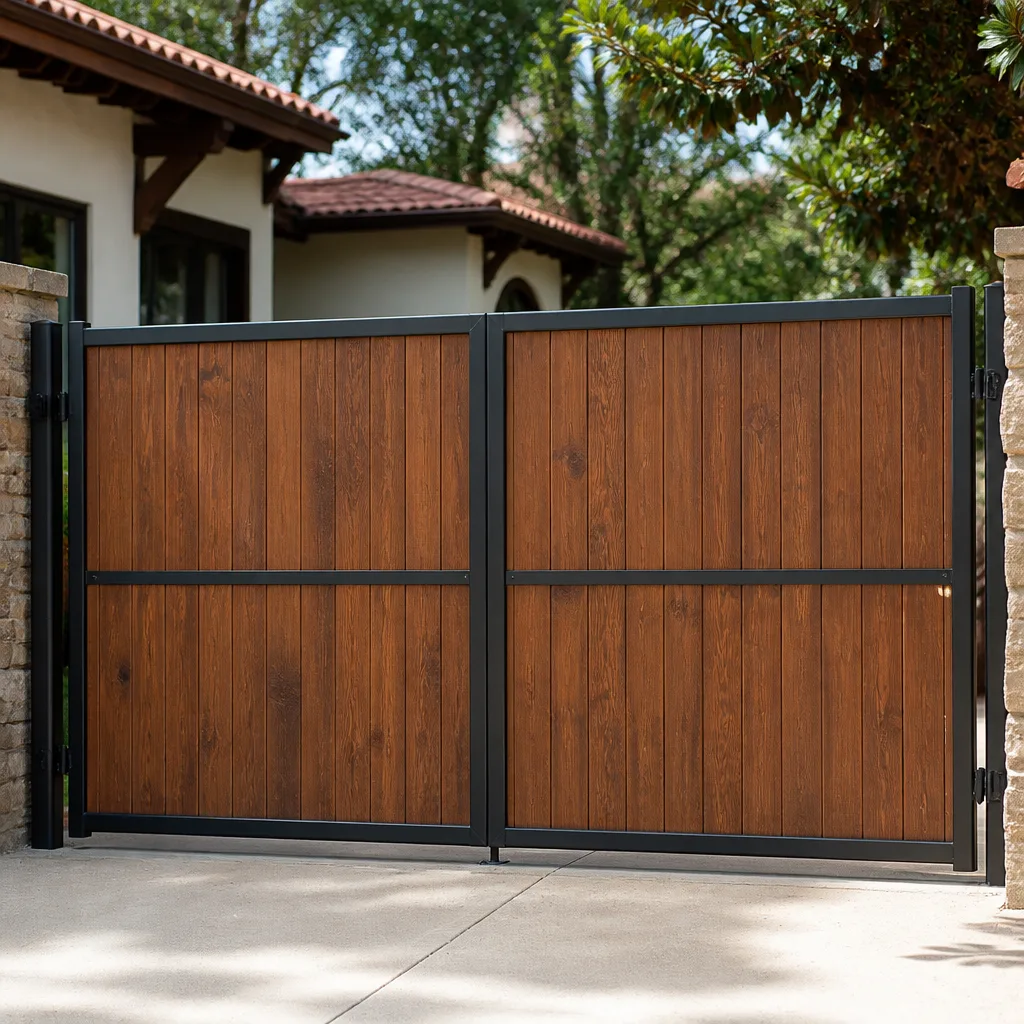 Wood & steel frame
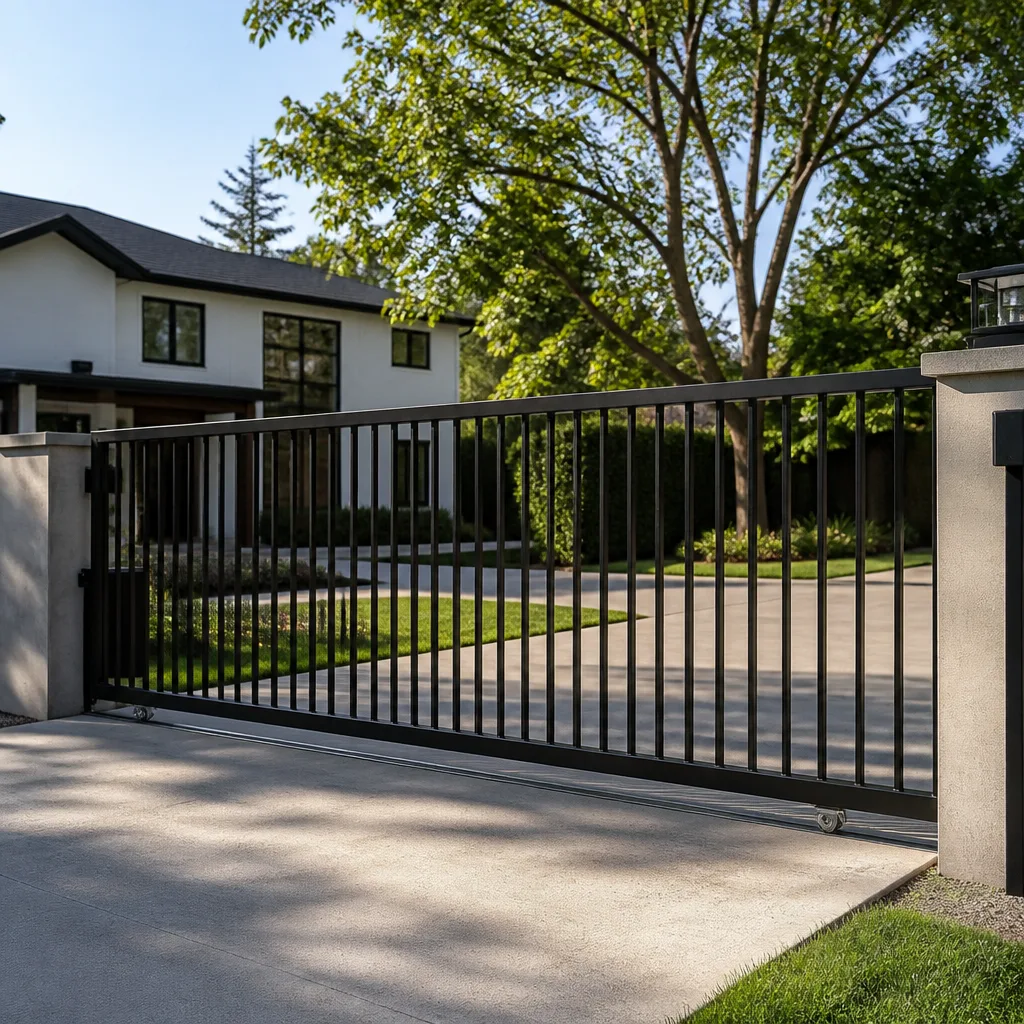 Sliding driveway gates
Free on-site gate assessment - hinges, posts, and your LiftMaster or Nice gate operator checked before anything is quoted
The assessment is free and the quote is the invoice.
Get your free estimateHow to Hire a Gate Repair Contractor in San Antonio: A Step-by-Step Guide
Texas doesn’t require a specific gate repair license. Read that again. The guy who fixed your neighbor’s fence last weekend and the multi-brand specialist who services 200 gates a month both legally call themselves “gate repair contractors” in San Antonio. That single regulatory gap turns hiring into a self-screening exercise, and most homeowners don’t know which questions separate a real gate technician from a generalist with a truck and a YouTube search history. By the end of this guide, you’ll have five concrete filters to apply before anyone steps onto your property, plus the exact red-flag answers that should end a phone call immediately.
Styles & brands we work with
Quick Answer
To hire a gate repair contractor in San Antonio, verify they carry verifiable Texas general liability insurance, confirm they stock parts for specific opener brands rather than claiming to “service all brands,” require a written estimate before any work starts, check that they offer a written workmanship guarantee of at least one year, and ask how they communicate arrival times. A qualified contractor should answer all five questions in under ten minutes without deflecting, upselling, or pressuring you to book immediately.
Table of Contents
- Why Texas Licensing Rules Make Hiring Harder Than It Should Be
- The Five Questions to Ask Every Gate Repair Contractor
- How to Verify a Contractor’s Insurance in Under Three Minutes
- What a Written Estimate Should Contain in Texas
- Why Brand-Specific Parts Stock Matters More Than You Think
- The Visibility Standard: What Real Accountability Looks Like
- What Gate Repair Actually Costs in San Antonio
- Red-Flag Answers That Should End the Phone Call
- Common Mistakes to Avoid
- When to Call a Professional
- Frequently Asked Questions
- The Bottom Line
Why Texas Licensing Rules Make Hiring Harder Than It Should Be
Here’s the uncomfortable truth: Texas has no state-issued license specifically for gate repair contractors. Electricians need a TDLR license. HVAC technicians need a TDLR license. Gate technicians? Nothing. The Texas Department of Licensing and Regulation doesn’t recognize “gate repair” as a regulated trade. This means anyone with a toolbox, a truck, and a Facebook page can market themselves as a gate repair specialist in San Antonio without passing a single exam or demonstrating a day of formal training.
What does exist is a patchwork of adjacent requirements. Any contractor performing electrical work on a gate opener technically falls under general electrical code requirements if the work involves line-voltage connections. Most gate opener repairs stay in low-voltage territory, which sidesteps those rules entirely. The result? San Antonio homeowners have to function as their own licensing board.
This isn’t hypothetical fear-mongering. We’ve seen the aftermath of unqualified repair attempts across San Antonio neighborhoods from Stone Oak to Alamo Ranch. Gates that worked intermittently before a repair and then stopped entirely. Openers wired with wire nuts rated for indoor use left exposed to Texas rain. Control boards fried by someone who skipped the surge diagnostics and replaced a $400 board when a $30 capacitor was the actual culprit. The common thread is almost always the same: a contractor who quoted low, worked fast, and left before the problem reappeared.
The solution isn’t to avoid hiring anyone. It’s to hire someone who can prove they know what they’re doing, and that proof comes through specific, verifiable signals. A gate specialist should be able to name the brands they stock, explain the diagnostic process, and show you their insurance certificate without hesitation. If they can’t, you’re interviewing a generalist. In San Antonio’s climate, where hundred-degree summer afternoons bake gate motors and monsoon-season rain storms short exposed wiring, a generalist’s guesswork gets expensive quickly.
The Five Questions to Ask Every Gate Repair Contractor
Before you let anyone diagnose your gate, run them through these five questions. A legitimate specialist answers all five directly, with specifics, in under ten minutes. A generalist stalls, deflects, or gets vague. Here’s what to ask and what to listen for:
- “Which opener brands do you stock parts for?” The right answer is specific brand names: LiftMaster, FAAC, BFT, Ghost Controls, DoorKing. The wrong answer is “all of them” or “we can get anything.” No contractor stocks parts for every brand. Specialists stock for the brands they repair most often because they know which parts fail and keep them on the truck. A contractor who says “we service all brands but need to order parts” means you’ll pay for a second visit when the part arrives.
- “Can I see your certificate of insurance?” The right answer is “I’ll email it to you right now” or “it’s in my truck, here’s a photo.” The wrong answer is a pause, an explanation about why it’s not available today, or a promise to bring it later. A contractor who can’t produce proof of general liability insurance instantly hasn’t been asked before, which tells you how much vetting their past customers did.
- “What does your written estimate include?” The right answer includes line items: labor, parts, diagnostic fee (if any), and warranty terms. The wrong answer is a number spoken aloud with no paper trail, or “we’ll figure it out once we’re in there.” In Texas, spoken estimates are worthless. Written ones are enforceable.
- “What happens if the repair fails in a month?” The right answer names a specific warranty period and what it covers. The wrong answer is vague reassurance like “we stand behind our work” without a number attached. A workmanship guarantee should be written, dated, and at least 90 days. Reputable gate specialists in San Antonio often provide a full year.
- “How will I know when you’re arriving?” The right answer involves a specific time, a text message, or a live tracking link. The wrong answer is “sometime between 9 and 2.” Four-hour windows were the standard in 2005. A contractor who still operates on them hasn’t invested in basic scheduling technology, which tells you something about how they run the rest of their business.
Ask these five questions in order. Don’t skip the insurance one, even if the contractor seems friendly and professional. Friendliness doesn’t cover a broken gate arm that falls on a car, and without insurance, that liability lands on you.
How to Verify a Contractor’s Insurance in Under Three Minutes
Here’s a step-by-step process that takes less time than ordering coffee. The Texas Department of Insurance maintains a public lookup tool that lets anyone verify whether a contractor’s general liability policy is active, what the coverage limits are, and who the insurer is. You don’t need to be a lawyer or an insurance broker to use it.
- Ask the contractor for their insurance certificate. They should provide a COI (Certificate of Insurance) that lists their business name, the insurer, the policy number, and the coverage amount. General liability for gate repair should be at least $300,000. Most legitimate contractors carry $500,000 to $1 million.
- Go to the TXDOI website and run a company search. Search for the insurance company name listed on the certificate, not the contractor. Confirm the insurer is licensed to operate in Texas. An out-of-state insurer that isn’t licensed in Texas can’t legally cover work performed here, which invalidates the policy for your job.
- Call the insurer’s verification line. Most major insurers have an 800 number specifically for policy verification. Give them the policy number and ask: (a) is this policy active, (b) does it cover the contractor’s business activities in San Antonio, and (c) what are the coverage limits for property damage and bodily injury. This takes two minutes on the phone.
- Check the policy dates. The coverage period should end after your repair date. A policy that expired last month is not coverage, no matter what the contractor says about “renewal paperwork.”
We know this sounds like homework. It’s three minutes. The average gate repair in San Antonio costs between $200 and $800. Verifying insurance protects you from a worst-case scenario that could cost twenty times that amount. If a contractor balks at any step in this process, that’s your answer.
While you’re vetting, check whether the contractor’s San Antonio home service area matches your neighborhood. A contractor based in Austin who “services San Antonio” means longer response times and a travel charge baked into your quote.
What a Written Estimate Should Contain in Texas
Texas law doesn’t mandate a specific format for repair estimates, but the Texas Deceptive Trade Practices Act does require that any material statement a contractor makes about price or scope be accurate. That’s a legal baseline. Your personal baseline should be higher. Here’s what a written estimate for gate repair in San Antonio should include, separating the legal minimum from the practical standard:
The Legal Minimum in Texas
- The contractor’s business name and physical address (not just a phone number)
- A description of the work to be performed
- The total price or a clearly stated hourly rate plus estimated hours
- Any materials or parts included in the quote
- Payment terms and due date
The Practical Standard for Homeowner Protection
- Line-item breakdown. Labor separated from parts. Parts listed by name or part number, not “miscellaneous materials.” If a limit switch fails and needs replacement, the estimate should say “limit switch, brand name, model number” and a price.
- Diagnostic fee disclosure. If there’s a fee to come out and diagnose, it should be stated in writing before the visit, including whether it’s waived if you approve the repair.
- Warranty terms in writing. Exactly what’s covered, for how long, and what’s excluded. A one-year written guarantee means something. “We’ll make it right” means nothing.
- Scope exclusions. What’s NOT included. If the gate post is leaning and needs concrete work, that should be listed as excluded or noted as a separate quote. Surprise exclusions are how contractors inflate invoices after work starts.
- Change order policy. What happens if the technician finds additional damage during the repair? A clear policy says: additional work requires a written change order approved by you before any extra work is done. No verbal approvals, no surprises.
- Diagnostic visit: $49 to $89, often waived if you approve the repair during the same visit. Some companies charge $150 or more for a standalone diagnostic that goes toward the repair if approved.
- Limit switch replacement or adjustment: $75 to $150. The limit switch is the small sensor that tells the gate when to stop at the fully open or closed position. When it fails, the gate overruns or stops short.
- Control board replacement: $250 to $600, depending on brand. Ghost Controls and Mighty Mule boards run lower. FAAC and BFT boards run higher. This price should include labor and programming.
- Gate opener motor replacement: $450 to $1,200. This is the most common major repair on residential gates in San Antonio. The motor itself, the mounting hardware, and the integration work all factor in.
- Full opener replacement (motor, board, arms, safety edges): $1,200 to $3,500. New safety edges are legally required for automatic gates under UL 325 standards, and any honest quote should include them.
- Gate wheel or roller replacement: $100 to $300, depending on gate weight and whether the track needs adjustment.
- “I don’t carry insurance, but I’m really careful.” This is not a negotiation. No general liability insurance means any damage to your property, your neighbor’s property, or the technician themselves becomes your problem. End the call.
- “I can’t give you a written estimate, but I can give you a ballpark.” Ballpark estimates are for stadium architects, not gate repair. If a contractor won’t commit to a written price, they’re either unsure of their diagnosis or planning to adjust the number later.
- “We service all brands. No, I don’t know which brands specifically.” This means they’ll diagnose, order, and return. You’ll pay for the inefficiency, either in time or money.
- “Gate repair isn’t really that complicated.” Gate openers involve low-voltage electronics, mechanical torque, safety sensors, and weatherproofing. A technician who thinks it’s simple lacks the respect for the work that prevents costly mistakes.
- “I’ll need a deposit before I can diagnose anything.” Legitimate gate repair contractors in San Antonio diagnose first, quote second, and charge third. Upfront payment before diagnosis is a red flag unless you’re commissioning a major installation, not a repair.
- “I don’t give written warranties, but I’ll come back if there’s a problem.” You want the comeback promise in writing with a specific timeframe. “I’ll come back” with no documentation is a hope, not a warranty.
- Hiring the first contractor who answers the phone. Desperation leads to bad hires. Even with a gate stuck open on a Sunday evening, taking ten minutes to verify insurance and ask the five questions saves you from compounding a bad situation with a bad contractor.
- Skipping insurance verification because the quote is low. A low quote with no insurance is the most expensive quote you’ll ever accept. The savings evaporate the first time something goes wrong.
- Assuming “licensed” means “licensed to repair gates.” Texas has no gate repair license. A contractor who says “we’re licensed” without specifying what license they hold is being cagey. Ask what license, issued by whom, and what it covers.
- Accepting a verbal quote. In San Antonio’s competitive market, verbal quotes are unenforceable and easily forgotten. If it’s not written, it doesn’t exist.
- Ignoring brand-specific experience. A LiftMaster swing arm and a FAAC hydraulic operator are different machines with different failure modes. Hiring someone who’s never touched your brand means paying for their learning curve.
- Focusing on price instead of visit count. A $200 repair that takes three visits costs more than a $350 repair that takes one. Always ask how many visits the repair will require.
- Not asking about arrival communication. A contractor who can’t tell you when they’ll arrive is signaling that they don’t track their schedule. The repair experience will match the booking experience.
At Calder Gate Repair, we put the price in writing before any work starts, and the number on the invoice is the number agreed to at the door. That’s a non-negotiable standard, not a premium add-on. When you’re comparing estimates from electric gate repair contractors in San Antonio, ask whether the written estimate includes a change order policy. If they look confused, they haven’t thought about it. That’s a signal.
Why Brand-Specific Parts Stock Matters More Than You Think
“We service all brands” is the most common phrase in gate repair marketing, and it’s also the most misleading. Servicing all brands and stocking parts for specific brands are fundamentally different capabilities, and the difference determines whether your repair takes one visit or three.
Here’s what actually happens on a repair call. A technician diagnoses a failed Ghost Controls control board. If they stock Ghost Controls parts, the repair is completed that day. If they don’t, they order the part, it ships in three to five business days, and they return for a second visit. You’ve now paid twice for labor or accepted a bundled price that included that inefficiency. You’ve also waited a week with a gate that doesn’t open in a city where hundred-degree heat makes walking to your own driveway feel like a punishment.
Specialists stock parts for the brands they see most often because they’ve built a local service history. In San Antonio, that typically includes LiftMaster for residential swing and slide gates, FAAC and BFT for higher-end hydraulic and electromechanical operators, and Mighty Mule and Ghost Controls for DIY-origin systems that homeowners later want professionally serviced. DoorKing and Elite appear frequently in gated communities and commercial-adjacent residential properties. A contractor who can name the brands they stock is demonstrating pattern recognition. A contractor who “services all brands” is demonstrating a willingness to order parts and charge you for the wait.
Ask this directly: “Which brands do you keep on the truck?” Listen for specific names. If they mention LiftMaster and FAAC and perhaps Linear or Viking, you’re talking to someone with real field experience on commercial-style operators. If they say “whatever you’ve got, we can handle it,” ask how many days it takes to order parts. That answer tells you everything about their visit count.
Our technicians at Calder are factory-familiar with nine specific brands: LiftMaster, FAAC, BFT, Linear, Viking, Ghost Controls, DoorKing, Elite, and Mighty Mule. That’s not a marketing slogan. It’s a parts inventory decision that determines whether your gate opener repair in San Antonio gets done in one visit.
The Visibility Standard: What Real Accountability Looks Like
Rideshare apps changed what consumers expect from any service that sends a person to their home. You see who’s coming, a photo, a live tracking map, and an exact arrival time. Gate repair, for most companies, still operates like it’s 1998: a four-hour window, a generic van, and a technician whose name you learn when they introduce themselves at the door.
The Relay Visibility Guarantee exists because that gap is fixable, and the fix matters for more than convenience. Before a technician arrives, you get their name, photo, and a live, trackable arrival time. You know who’s coming and when they’ll arrive, down to the minute. That’s not a luxury. For a homeowner letting a stranger onto their property to work on a security-critical component, knowing who’s coming is the bare minimum of professional courtesy. The fact that most contractors don’t offer it tells you how much they’ve invested in their customer experience.
Then there’s the documentation. Every job should produce before-and-after photos that show what was broken and what was fixed. The invoice should be digital, itemized, and payable from a link. No paper carbon copies, no “pay the guy in cash” ambiguity. A digital paper trail protects both parties, but it mostly protects you. If a repair fails a month later, you have documented evidence of what was done and when.
This is the benchmark. When you’re interviewing Calder Gate Repair San Antonio home or any other contractor, ask: “Do you send a photo and live arrival time before the technician shows up?” If the answer is no, ask yourself what else they haven’t modernized.
What Gate Repair Actually Costs in San Antonio
Gate repair pricing in San Antonio runs a wide range because the work spans a wide spectrum: a simple limit switch adjustment might take thirty minutes, while a full opener replacement with new safety edges and a control board can run half a day. Here’s what we see across the city, from Dominion to Helotes to Terrell Hills:
These numbers are ranges, not quotes. Your gate, your opener brand, and the specific failure determine the final number. The point is that you should know the range before you call so you can spot a price that’s wildly out of line in either direction. A quote of $300 for a control board replacement is suspiciously low. A quote of $900 for a limit switch is predatory. The range protects you from both.
Weather in San Antonio also affects pricing. Our summers shorten the lifespan of gate motors that sit in direct sun all afternoon. Our occasional freezes crack plastic gears in cheaper openers. If a contractor blames the weather without specifying which component failed and how, they’re guessing. A specialist tells you exactly what broke and why the San Antonio climate accelerated it.
Red-Flag Answers That Should End the Phone Call
Some contractors disqualify themselves within the first three minutes, but only if you’re listening. Here are the exact answers that should prompt you to say “thanks, I’ll keep looking,” in order of how frequently we hear them reported by San Antonio homeowners:
Common Mistakes to Avoid
When to Call a Professional
Some gate problems are safe to diagnose yourself. A gate that’s visibly off its track, an opener that makes grinding sounds, or a keypad that stopped responding are all problems where you can observe and describe symptoms before calling someone. The repair itself, though, belongs to a professional whenever electricity, tension, or weight is involved. Gate springs under load can release with enough force to break bone. Opener control boards operate on live current. A gate that weighs 800 pounds carries crushing force. If your gate isn’t responding to the remote, the keypad, or the manual release, or if you notice exposed wiring, burning smells, or visible component damage, don’t attempt a fix. Electric gate repair in San Antonio is skilled work with real safety stakes. Calder Gate Repair offers free estimates in San Antonio with a written price before any work starts. Call (361) 314-4803 if your gate isn’t opening, closing, or responding the way it should.
Frequently Asked Questions
A qualified gate repair contractor can produce a certificate of general liability insurance on demand, name the specific opener brands they stock parts for, and provide a written estimate with line items and a documented warranty. Texas has no gate-specific license, so these verifiable signals are the practical replacement for state oversight. Ask all three questions before booking.
A proper gate repair estimate in San Antonio should list labor and parts separately, disclose any diagnostic fee, state the warranty period in writing, and outline a change order policy for additional damage discovered during the repair. If the estimate is a single number with no breakdown, ask for a line-item version before signing anything.
Most gate opener repairs in San Antonio run between $75 and $600 before parts, depending on the failure. Limit switch adjustments start around $75, while control board replacements typically run $250 to $600 including programming. A full opener replacement can reach $3,500 with new safety edges and motor installation. Call (361) 314-4803 for an exact quote on your specific opener brand and failure.
Yes, most gate opener repairs can be completed the same day if the technician stocks parts for your specific brand. FAAC and BFT parts are less common in general service vans, so a specialist who carries them saves you a second visit. If the contractor needs to order a part, timeline extends to three to five business days.
Yes, Calder Gate Repair handles residential and commercial-adjacent gate systems across San Antonio, including DoorKing and Elite operators commonly used at gated communities and apartment complexes. Every job includes a written estimate before work begins and the 365-Day Done Right Promise covering any repair that fails within a year.
Calder Gate Repair technicians are factory-familiar with nine major opener brands: LiftMaster, FAAC, BFT, Linear, Viking, Ghost Controls, DoorKing, Elite, and Mighty Mule. That covers virtually every gate opener a San Antonio homeowner is likely to own, and it means the parts most likely to fail are often on the truck during the first visit.
The Bottom Line
Hiring a gate repair contractor in San Antonio is a filtering exercise, not a leap of faith. Texas’s lack of a gate-specific license means the burden of verification falls on you, but the filters are simple: check insurance through TXDOI, demand a written estimate with line items, confirm brand-specific parts stock, require a written warranty with a named term, and insist on modern arrival communication. A contractor who clears all five filters without hesitation is a specialist worth trusting. Anyone who stumbles on two or more is a generalist charging specialist prices. Calder Gate Repair holds itself to the standard this guide describes: written pricing before work starts, a 365-Day Done Right Promise on every repair, and a live person answering calls at (361) 314-4803, 24 hours a day.
Written by Nico Alvarez, Owner at Calder Gate Repair San Antonio, serving San Antonio since 2009.
See the difference
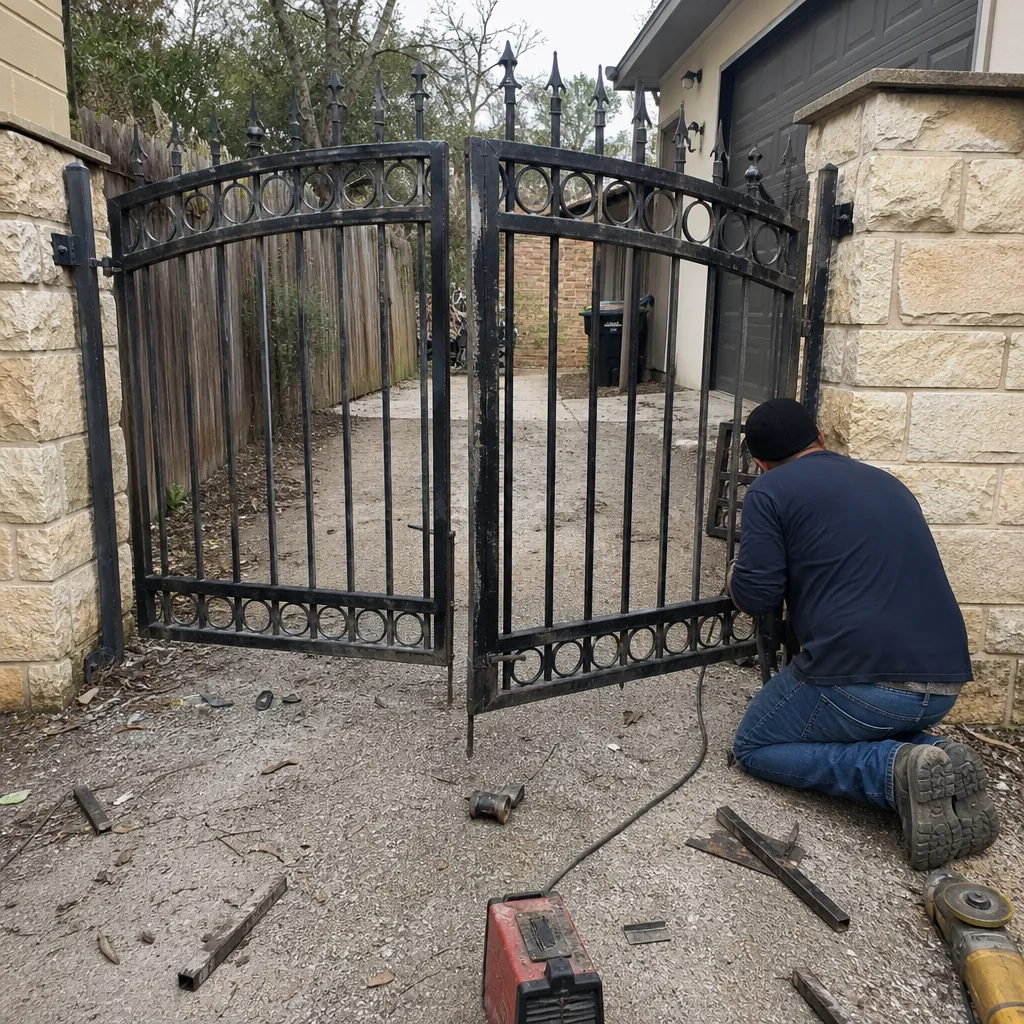 Before
 After
After Before
 After
After Before
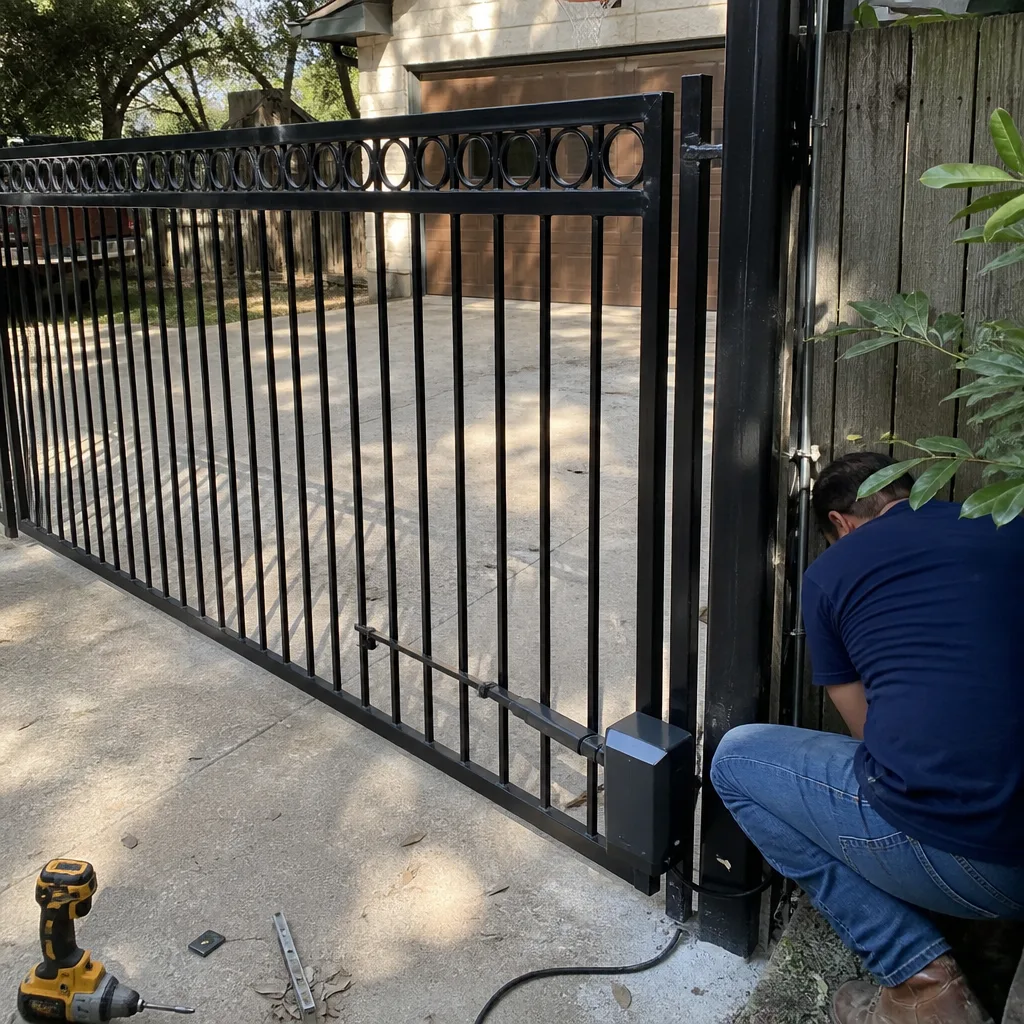 After
After