
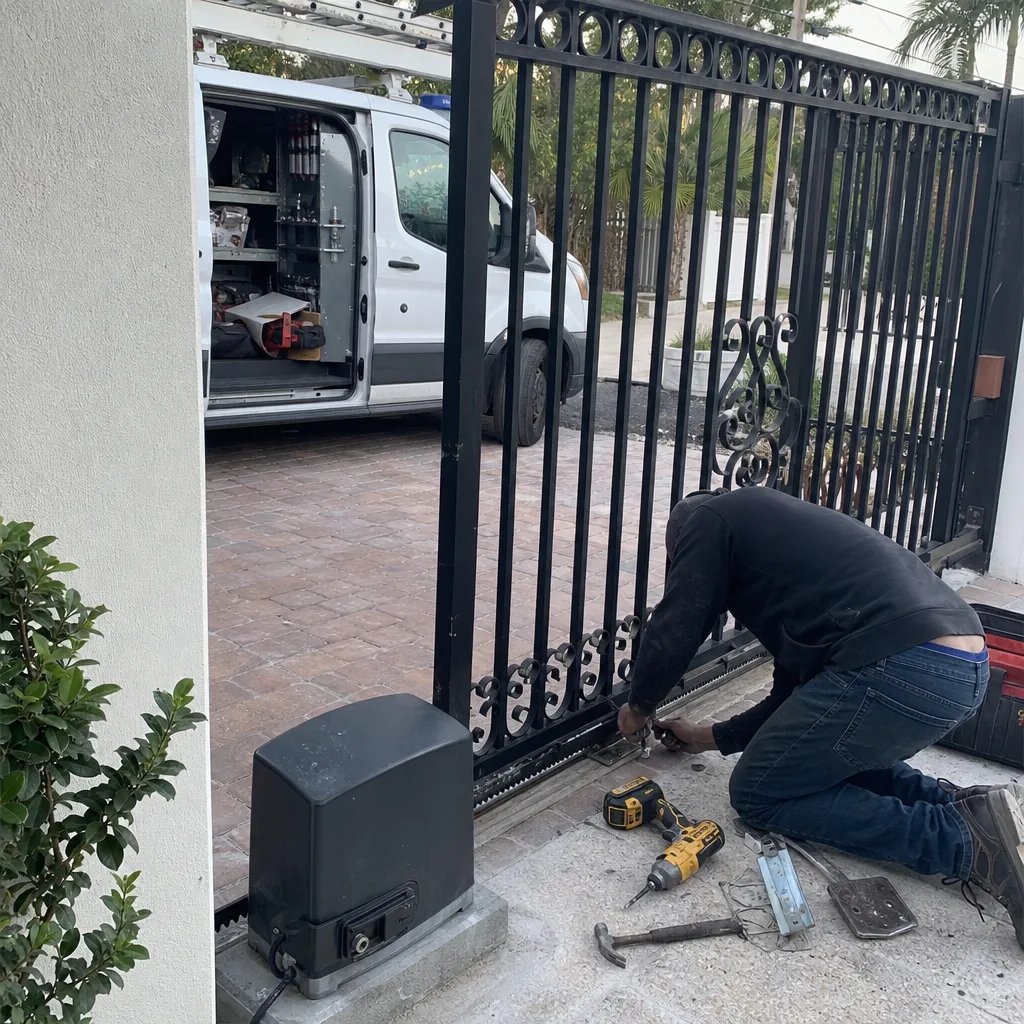
Last updated October 16, 2026
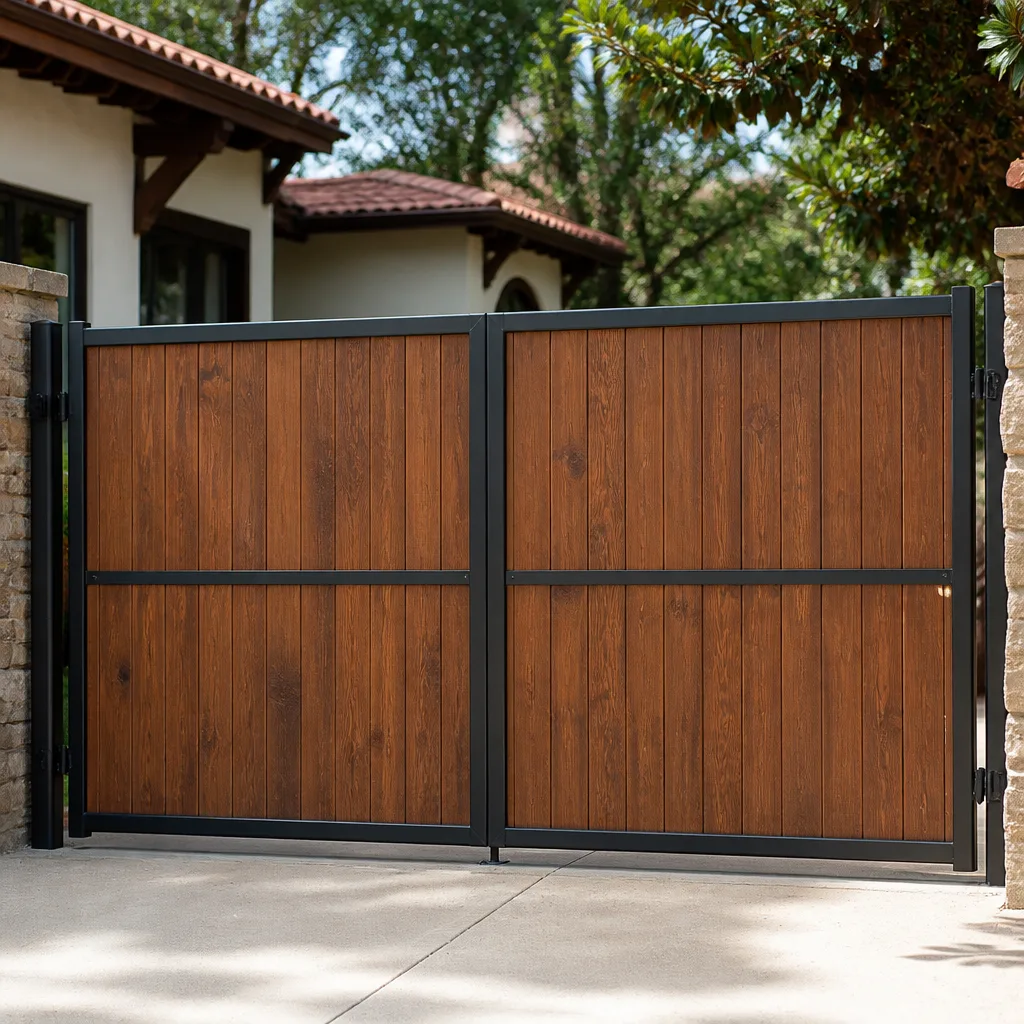 Wood & steel frame
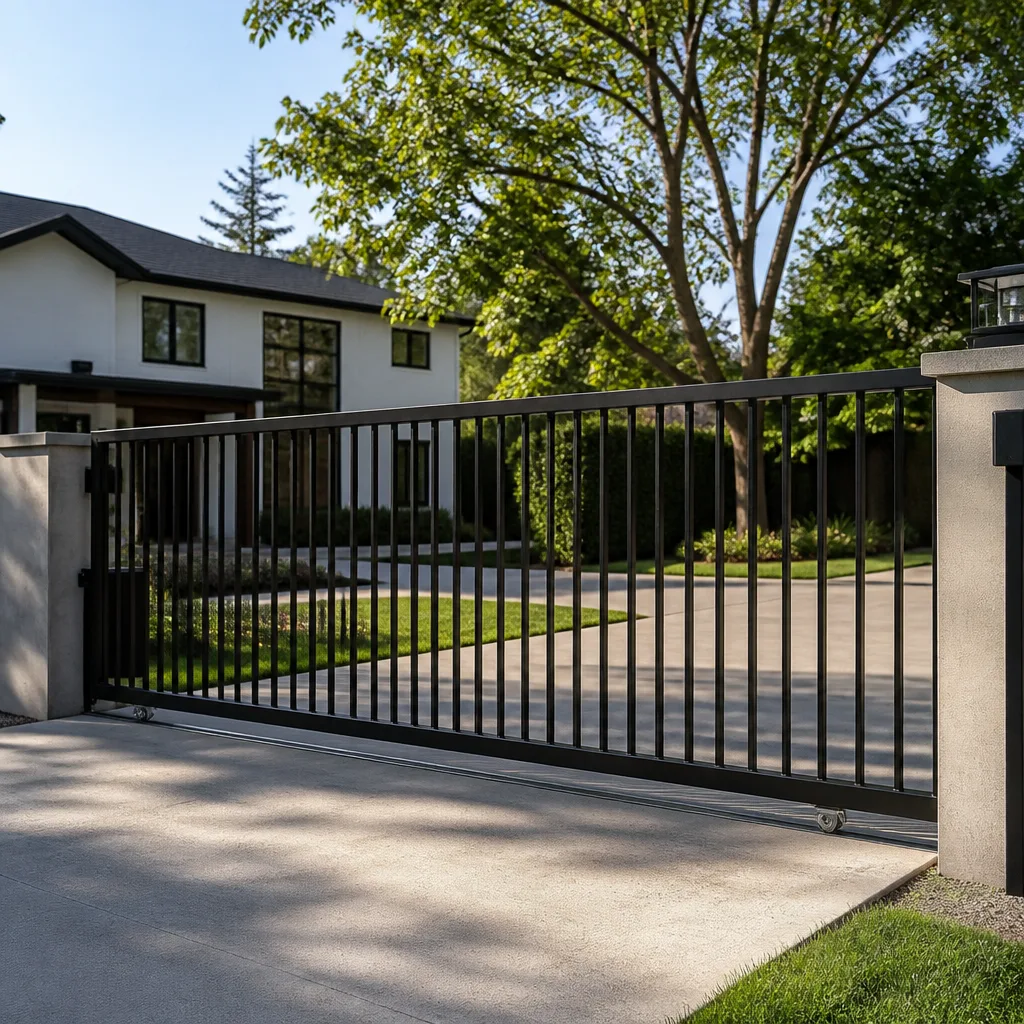 Sliding driveway gates
Free on-site gate assessment - hinges, posts, and your LiftMaster or Nice gate operator checked before anything is quoted
The assessment is free and the quote is the invoice.
Get your free estimateGate Repair Permits, Codes & Inspections in TX: What You Need to Know
A closing table is the wrong place to learn that your gate opener swap needed a permit. One San Antonio homeowner we heard about found out exactly that way: a $600 motor replacement done two years earlier required a City of San Antonio electrical permit, and the discovery delayed the sale by three weeks while the paperwork was retroactively filed. The contractor never mentioned it. This guide explains precisely when gate work in San Antonio and Bexar County crosses the permit line, when it doesn’t, and how to avoid letting a small repair become a title-company headache.
Quick Answer
Most gate repairs in San Antonio, Texas, do not require a permit: mechanical-only work like replacing hinges, bolts, wheels, or a like-for-like gate opener using the same voltage class falls under routine maintenance. A permit is typically required when the work involves new electrical circuits, voltage-class changes (such as swapping a 12V system for 120V), substantial structural alteration to the gate frame or footings, or relocation of the gate itself. HOA architectural approval is a separate requirement that applies before city permits in many San Antonio neighborhoods.
Styles & brands we work with
Table of Contents
- The Line Between Repair and Replacement: Why Permit Language Matters
- San Antonio Development Services: The Thresholds That Actually Trigger a Permit
- Electrical Work on Gate Openers: When a Motor Swap Stops Being DIY
- Mechanical-Only Swaps: What California Calls ‘Like-for-Like’ and Why It Usually Needs No Permit
- HOA Architectural Review vs. City Permits in San Antonio: Which Comes First?
- Bexar County Jurisdiction: The Rules Change Once You Leave the City Limits
- Plain-Language Flowchart: Repair Type → Permit Needed? → Who Issues It → Turnaround in SA
- Permit Fees and Realistic Timelines in San Antonio
The Line Between Repair and Replacement: Why Permit Language Matters
Here’s the single most useful distinction in Texas gate work: a repair restores something to its original condition, while a replacement swaps it for something new. The City of San Antonio Development Services Department treats these differently, and so do most Texas municipalities. A repair that keeps the gate functioning as originally designed rarely triggers a permit. A replacement that changes how the gate operates, what powers it, or where it sits often does.
In our experience across San Antonio neighborhoods from Alamo Heights to Stone Oak, the confusion usually starts with the word “replacement” itself. A homeowner replaces a worn gear inside a BFT opener and calls it a repair, which it is. Another homeowner replaces a whole Linear opener with a different model running on a different voltage and calls it a replacement, which it is too. But the second one crosses a code line that the first one doesn’t. The International Residential Code, which San Antonio adopts with local amendments, cares about whether the work alters the electrical load, the structural support, or the safety features of the installation. When it does, the work is an alteration, and alterations are regulated.
What this means in practical terms: if the gate still works when you’re done and no new wire was run, no new circuit added, and no structural member changed, you’re almost certainly in repair territory. No permit needed. If you changed the power source, replaced the posts, widened the opening, or swapped from a solar panel to a hardwired transformer, you’re in replacement or alteration territory, and the city may want to see it.
San Antonio Development Services: The Thresholds That Actually Trigger a Permit
The City of San Antonio issues permits through Development Services, and it’s more specific than most homeowners expect. The San Antonio property maintenance and building codes don’t treat gates as a single category. They treat the gate as electrical equipment, structural construction, or both, depending on what the job involves. This is the section to read carefully if you’re planning any gate work in San Antonio.
Here are the triggers, in plain language, based on how San Antonio Development Services applies the International Residential Code and the city’s local amendments:
- New electrical circuit: Running a new 120V line from your panel to a gate opener requires an electrical permit. This is not a gray area. Any new branch circuit in a residential setting needs a permit in San Antonio, and a gate opener fed by a dedicated line is no exception.
- Voltage-class change: Swapping a 12V or 24V opener for a 120V hardwired unit changes the installation’s electrical classification. Even if the old wiring is reused, the panel connection and breaker may need updating, and that requires an electrical permit.
- Structural work on posts or footings: If a gate post is replaced, or if a new concrete footing is poured, the city may require a building permit. A sagging gate that needs a new post means excavation, concrete, and inspection. This is a structural alteration, not a repair.
- Relocating the gate: Moving the gate to a different position on the property, or altering the property line access point, can require a site plan review and a building permit. This is rare for homeowners, but it happens in San Antonio when driveways are reconfigured or additions are built.
- Adding safety devices that require programming into a new controller: Generally no permit for the devices themselves. The permit question attaches to the electrical work that feeds them.
What does not trigger a permit in the City of San Antonio: replacing a hinge, bolt, wheel, or roller. Lubricating and adjusting an existing opener. Replacing a battery in a solar opener. Replacing a circuit board in the same opener model, provided the wiring remains untouched at the panel level. Swapping a Viking opener for another Viking opener that uses the same voltage and the same wiring connection, with no panel changes. These are the repairs that San Antonio homeowners can make without involving Development Services.
Electrical Work on Gate Openers: When a Motor Swap Stops Being DIY
Here’s the section that saves people from the exact situation in the opening of this guide and the Gate Repair Warning Signs: A San Antonio Homeowner’s Reference Guide. A gate opener motor swap is not automatically a permit-free job, and the thing that makes the difference is the electrical connection between the opener and the house.
If the opener is a plug-in or hardwired unit on a 120V circuit, and you or your contractor replaces it with a different model, the city wants to see an electrical permit if anything changes at the connection point or the panel. That includes installing a new outlet, moving the existing outlet, changing the breaker, or running wire through new conduit. It does not include unplugging a unit, plugging in a new one that uses the same outlet, and walking away.
Low-voltage openers, which are the most common type in San Antonio, sit in a friendlier category. Ghost Controls, Mighty Mule, and many LiftMaster models run on 12V or 24V DC, often with a small transformer plugged into a standard outlet. The low-voltage side of that system is not regulated as electrical work in the same way a hardwired 120V line is. But the moment a contractor touches the 120V side, changes the outlet to a hardwired junction box, or adds a dedicated circuit, the permit requirement kicks in.
The danger zone for homeowners is the transformer replacement. If a gate opener transformer fails and is replaced with a unit that draws more current, and that unit is hardwired rather than plugged in, the city classifies it as an electrical alteration. That’s a permit situation. If it plugs into the same wall outlet and the outlet isn’t touched, it’s a repair. The distinction feels technical, but it’s exactly the kind of thing that comes up in a home inspection report.
Solar gate openers deserve their own note here because they’re increasingly common in San Antonio’s sun-rich climate. A solar panel, charge controller, and battery setup on a Ghost Controls opener is low-voltage DC work. No electrical permit is required for the panel or controller swaps. If the homeowner later decides to connect the opener to a 120V AC backup charger that is hardwired into an outlet or junction box, that piece of the job becomes regulated. The solar side stays exempt. The AC side does not.
Safety caveat: gate openers contain capacitors that hold a charge even after the power is disconnected, and a 120V line can cause serious injury or death. We don’t offer DIY electrical instructions here, and we don’t recommend anyone open a hardwired junction box without a licensed electrician or a gate technician who is trained on that specific equipment. The purpose of this section is to help you recognize when a permit applies, not to help you do the electrical work without one.
Mechanical-Only Swaps: What California Calls ‘Like-for-Like’ and Why It Usually Needs No Permit
Texas law and San Antonio code don’t use the phrase “like-for-like replacement” as a formal permit category, but the concept is embedded in how inspectors apply the residential code. A true replacement, where the new component matches the old one in form, fit, function, voltage, and connection method, is treated as maintenance. No permit. No inspection. No city involvement.
The phrase matters because contractors and homeowners sometimes assume it applies more broadly than it does. Replacing a Viking arm actuator with a newer Viking arm actuator that mounts to the same bracket and connects to the same controller: like-for-like. Replacing a Viking arm actuator with a Linear arm actuator that requires a new bracket, new wiring, and new controller programming: not like-for-like, and possibly a permit situation if the wiring or voltage changes.
Here’s the list of mechanical components that are almost always permit-free when swapped without changing the power supply or the mounting structure:
- Gate hinges and hinge brackets
- Wheels, rollers, and track guides on sliding gates
- Bushings, bearings, and grease fittings
- Limit switches and safety photo eyes on existing low-voltage wiring
- Keypads, remotes, and receiver boards that plug into an existing controller
- Batteries for solar or DC backup systems
- Gate springs on manual gates
If a homeowner in the Dominion or Terrell Hills calls us about a sticking gate and we find worn rollers that need replacement, that’s a same-day mechanical repair with no permit question. If we find that the gate post has rotted at the base and needs to be re-set in concrete, that’s structural, and we tell the homeowner before we touch anything that the job may need a building permit depending on the scope. That’s the honest line most homeowners appreciate hearing before the invoice, not after.
HOA Architectural Review vs. City Permits in San Antonio: Which Comes First?
San Antonio has hundreds of HOAs, and many of them govern gates with an authority that the city doesn’t. In neighborhoods with deed restrictions or architectural guidelines, the HOA approval often comes first, and the city permit second, if a city permit is needed at all. Homeowners need to understand that these are two separate systems, with different timelines and different failure modes.
The HOA approval process in most San Antonio communities covers the aesthetics of the gate: height, material, color, style, and visibility from the street. A homeowner replacing a wooden swing gate with a metal sliding gate may not need a city permit at all, but they will almost certainly need HOA architectural review, and that review can take two to four weeks. If the same homeowner also needs an electrical permit for a new opener circuit, the HOA approval typically has to be completed first because the city permit application for a non-standard installation may ask whether the community has approved the work.
Here’s the sequence, in the order we consistently see it play out across San Antonio’s HOA-governed neighborhoods:
- Read the HOA’s architectural guidelines. Look for the section on gates, fences, and driveway access. Some HOAs explicitly prohibit gate replacements without approval. Others exempt repairs under a dollar threshold.
- Submit the architectural review application with photos and a description of the work. Expect two to four weeks in most communities, longer during peak season.
- Once the HOA approval is in hand, determine whether the city permit is needed based on the electrical and structural thresholds described above.
- Apply for the city permit online through the City of San Antonio Development Services portal if one is required.
- Schedule any required inspections after the work is complete. HOA approvals don’t get inspected by the city, but electrical and building permits do.
A common mistake in San Antonio is satisfying one of these systems and skipping the other. A homeowner gets HOA approval for a new gate, assumes the association handled everything, and skips the electrical permit. The city doesn’t know about it until the home is listed and an inspector notices the new opener circuit. Or a homeowner pulls a city permit, completes the work, and only then discovers the HOA has architectural standards that the new gate violates. Both failures are avoidable with twenty minutes of upfront research.
Bexar County Jurisdiction: The Rules Change Once You Leave the City Limits
San Antonio has a large city footprint, but Bexar County extends well beyond it, and the rules shift at the city limits line. Properties outside the San Antonio city limits but inside Bexar County fall under county jurisdiction for building permits, and that means a different process, different inspectors, and in some cases different thresholds.
Bexar County operates its own permitting through the Bexar County Public Works Department. For unincorporated areas, the county enforces building codes, but its scope is generally more limited than the City of San Antonio’s. In many unincorporated parts of Bexar County, there is no residential building permit requirement for gate work at all, including structural work, because the county does not operate the same density of code enforcement that a city does. Electrical work is the exception: Bexar County may defer to the state-adopted National Electrical Code for new electrical installations, and some electrical work may require inspection through a third-party provider.
But here’s the subtlety that trips people up. Many neighborhoods just outside San Antonio’s city limits, including parts of the far north side and the area around Helotes, are in what’s called an extraterritorial jurisdiction, or ETJ. In an ETJ, the City of San Antonio has limited authority over subdivision and development regulations, but not full building permit authority. The result is often a patchwork where the county permit office and the city ETJ rules both apply to the same land. A gate installation in an ETJ area might require county-level electrical inspection but no city building permit, or it might require nothing at all depending on the specific tract.
The practical takeaway for a Bexar County homeowner: don’t assume that what applies to a neighbor inside city limits applies to you. A quick call to the Bexar County Public Works permit office, or a conversation with a contractor who does regular work in your specific zip code, settles the question in minutes. In our experience, the variance across a ten-mile drive from inside the 410 loop to the county line is enough to change the entire permit picture for the same gate job.
Plain-Language Flowchart: Repair Type → Permit Needed? → Who Issues It → Turnaround in SA
Here’s the decision path we walk through with San Antonio homeowners on the phone, condensed into five questions. Follow the path for your specific job and you’ll know the permit answer before you pick up the phone to any contractor.
- Is the work strictly mechanical (hinges, rollers, wheels, bushings, springs)? If yes, no permit needed from the City of San Antonio or Bexar County in most cases. Proceed with the repair. HOA review may still apply if the gate appearance changes.
- Is the work replacing a gate opener with the same voltage and same connection method? If yes, no permit needed. If the opener is plugged into the same outlet and no panel work is done, it’s a repair. If the voltage class changes, such as 12V to 120V, go to step 3.
- Is there new electrical work at the panel, a new outlet, a hardwired transformer, or a new circuit? If yes, an electrical permit is required. Inside San Antonio city limits, apply through Development Services. Outside city limits, check with Bexar County Public Works. Typical turnaround for a residential electrical permit in San Antonio is 1 to 5 business days for express review, longer for non-standard installs.
- Is the gate post, footing, or structural frame being replaced or relocated? If yes, a building permit may be required. Inside San Antonio city limits, apply through Development Services. The average residential building permit review for simple structures is 5 to 10 business days. HOA architectural approval, if applicable, should be obtained first.
- Does the work involve a new gate or a gate style change in an HOA-governed neighborhood? If yes, the HOA approval process runs parallel to or ahead of any city permit. Expect 2 to 4 weeks for HOA review in most San Antonio communities.
This is the map we give every San Antonio homeowner before they spend a dollar. When the path ends in “no permit,” it’s a straightforward repair. When it ends in “permit required,” we always recommend pulling the permit before work starts, because retroactive permits are slower, more expensive in some jurisdictions, and exactly the kind of thing that surfaces at a closing table.
Permit Fees and Realistic Timelines in San Antonio
If you do need a permit in San Antonio, the cost is lower than most people expect. Typical residential electrical permit fees in the City of San Antonio run roughly $50 to $150 depending on the scope, and simple building permits for small structures are in a similar range. These are not the number that makes or breaks a gate project. The bigger line item is time.
Here’s the timeline reality, based on what we see day to day in San Antonio:
- Express electrical permit review: 1 to 3 business days for standard residential gate opener circuits. The city offers expedited review for simple job types.
- Standard electrical permit review: 5 to 10 business days when the job requires plan review or is bundled with other electrical work.
- Inspection scheduling: 2 to 5 business days after the work is complete, depending on inspector availability in your part of the city.
- HOA architectural review: 2 to 4 weeks, and this is the step that surprises homeowners the most because it’s outside the city’s control.
- Retroactive permit filing: 2 to 8 weeks, with additional fees in many jurisdictions, and this is the exact scenario that delayed the closing in our opening example.
When a San Antonio homeowner calls us with a gate opener failure and the job needs a permit, we’re upfront about the timeline before any work begins. The written price we give before starting work includes the scope of the permit work, and the invoice number matches the quote, not the other way around. That’s the way it should work.
Common Mistakes to Avoid
- Assuming all gate opener swaps are permit-free. A voltage-class change from 12V DC to 120V AC turns a simple swap into regulated electrical work. The permit trigger is the panel or wiring change, not the opener itself.
- Skipping HOA review when replacing a gate with a different style. Many San Antonio HOAs care more about gate aesthetics than the city does. A style change that ignores architectural review can result in a demand to remove the new gate at your expense.
- Letting a contractor decide the permit question without documentation. If a contractor says no permit is needed, ask them to put it in writing. If they won’t, that’s a red flag. The permit liability is yours, not theirs, when closing day arrives.
- Treating Bexar County rules as identical to San Antonio rules. The city and county operate different permit systems, and the thresholds don’t align. Your legal address determines which rules apply.
- Retrofitting a permit only when you’re selling. A retroactive permit costs more and takes longer than pulling one before the work. The closing-table surprise in our opening example is entirely avoidable.
- Assuming solar openers are always exempt. The solar side is exempt. A hardwired AC backup charger is not. Know which side of the system you’re touching.
- Forgetting that the city and the HOA are two separate approval tracks. Satisfying one doesn’t satisfy the other. Both have to happen in the right order, and neither agency will remind you about the other.
See the difference
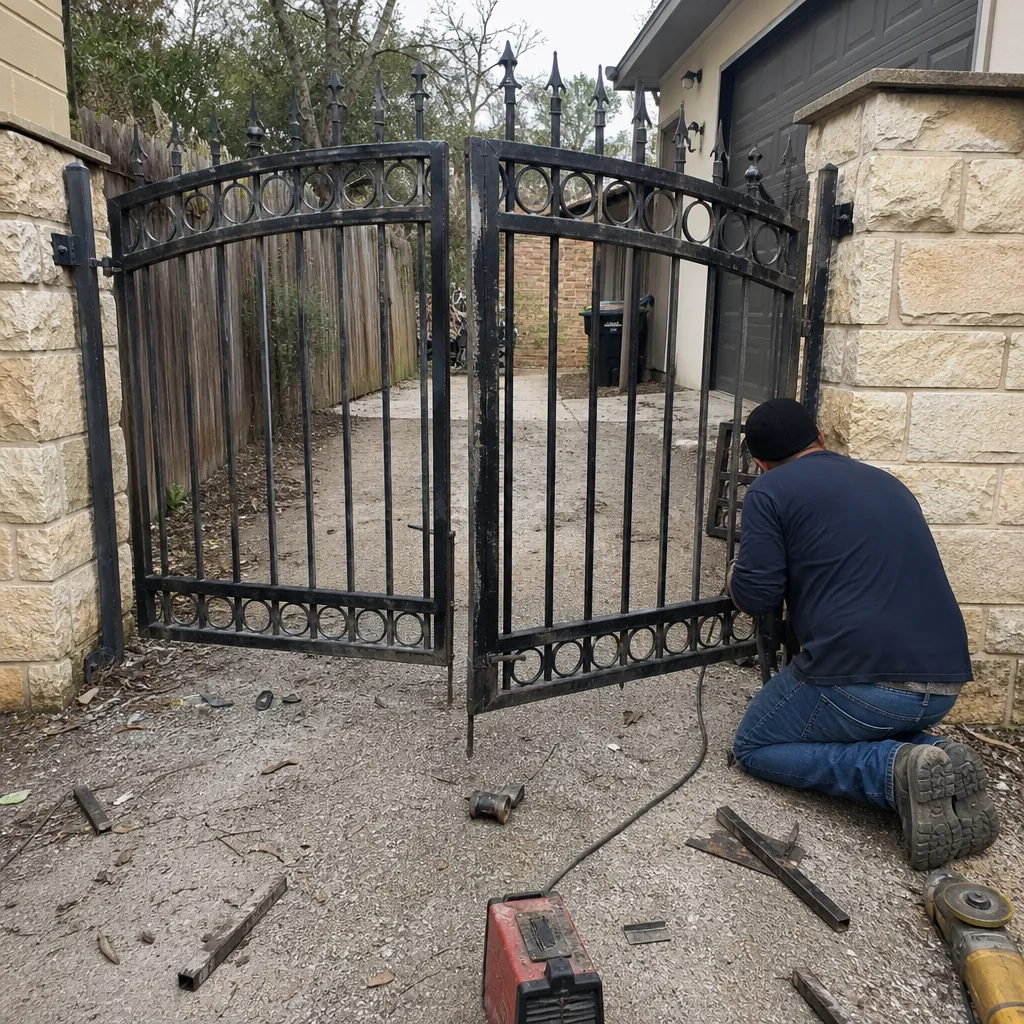 Before
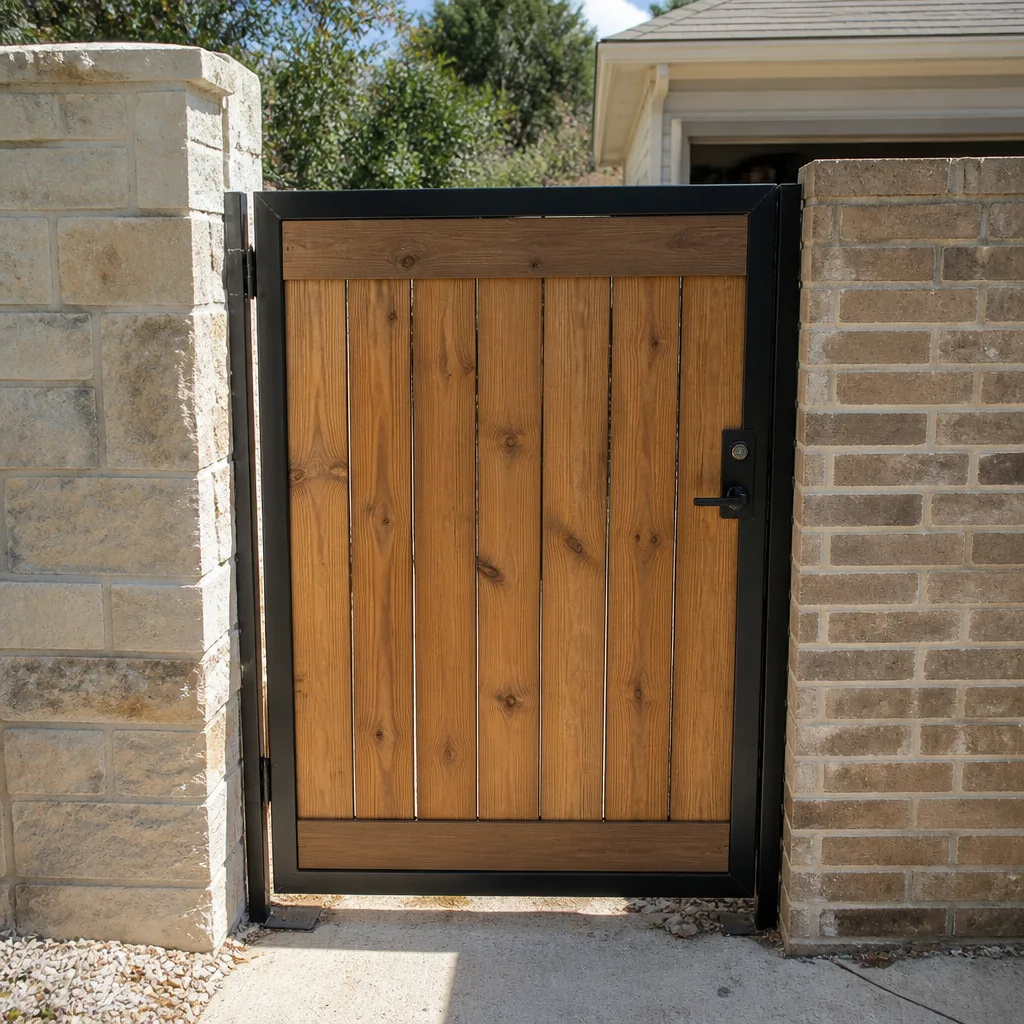 After
After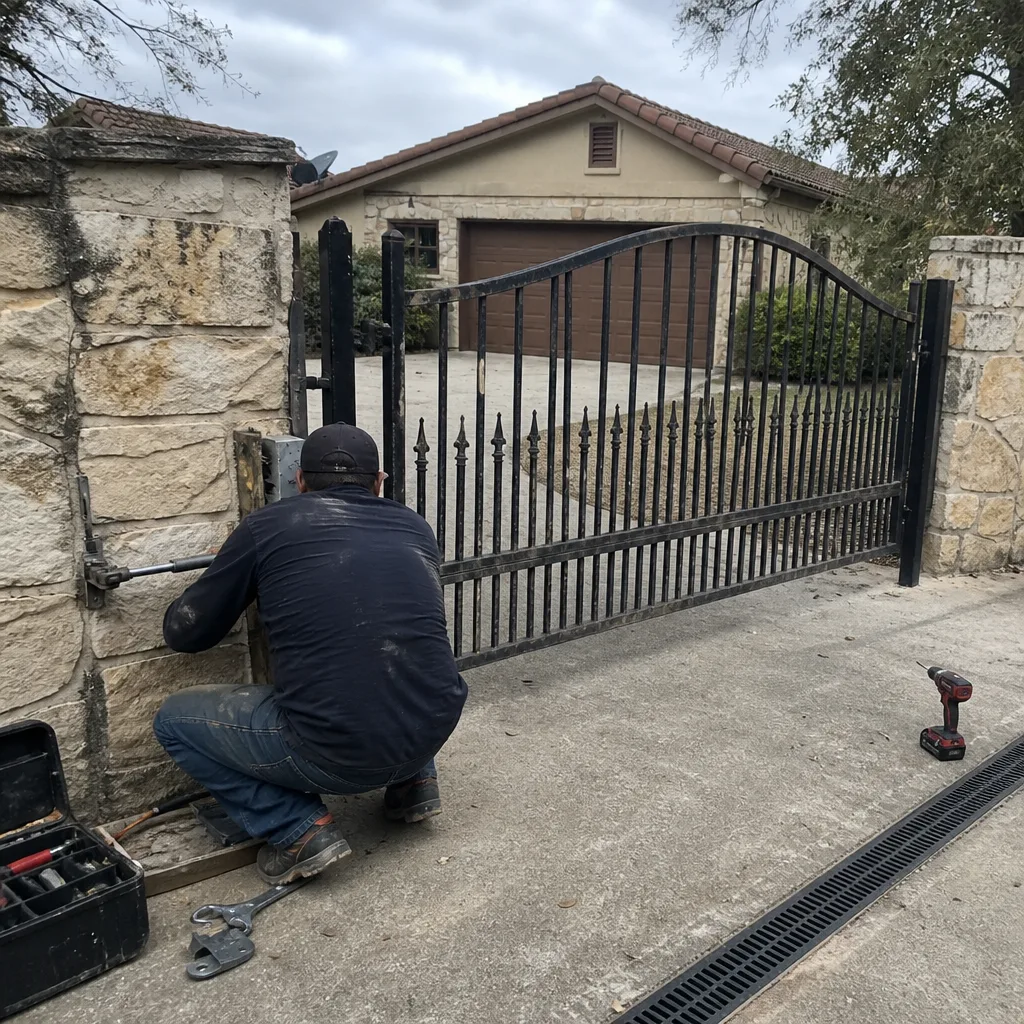 Before
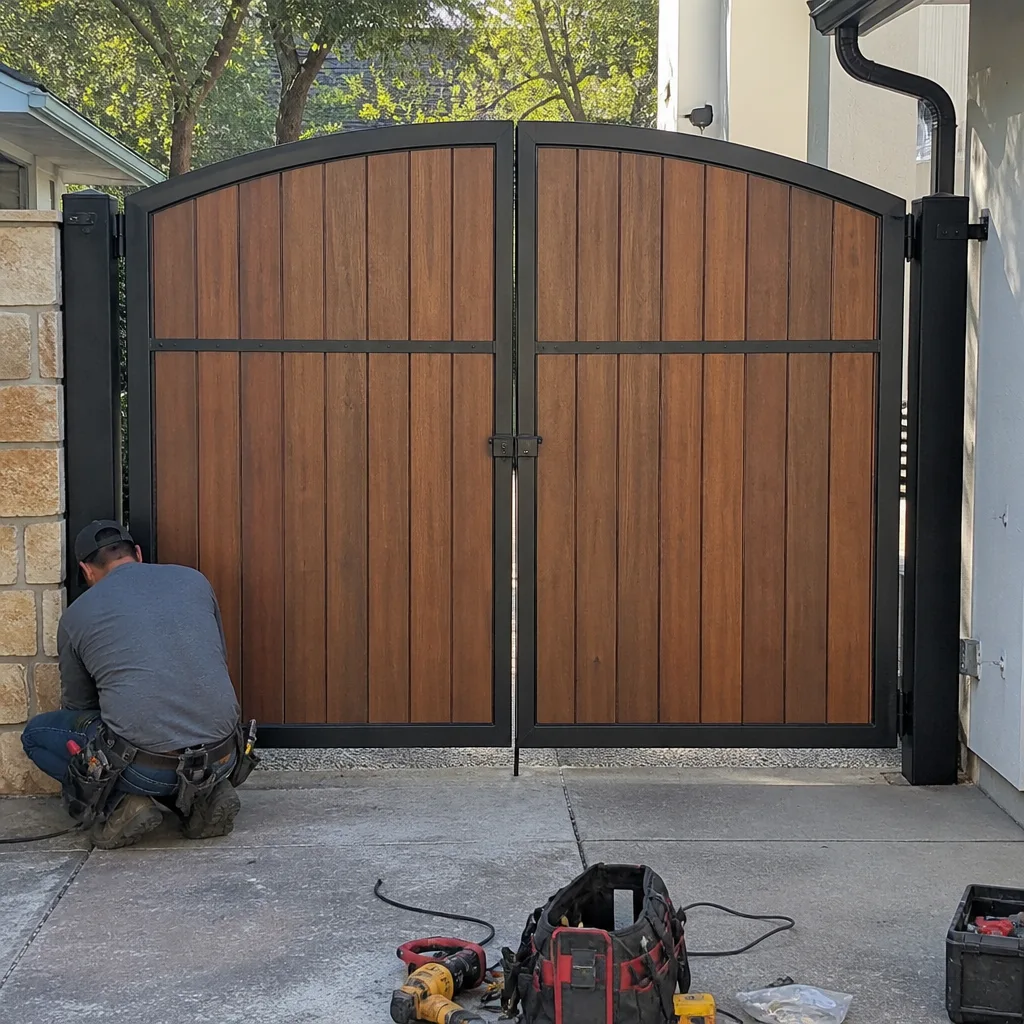 After
After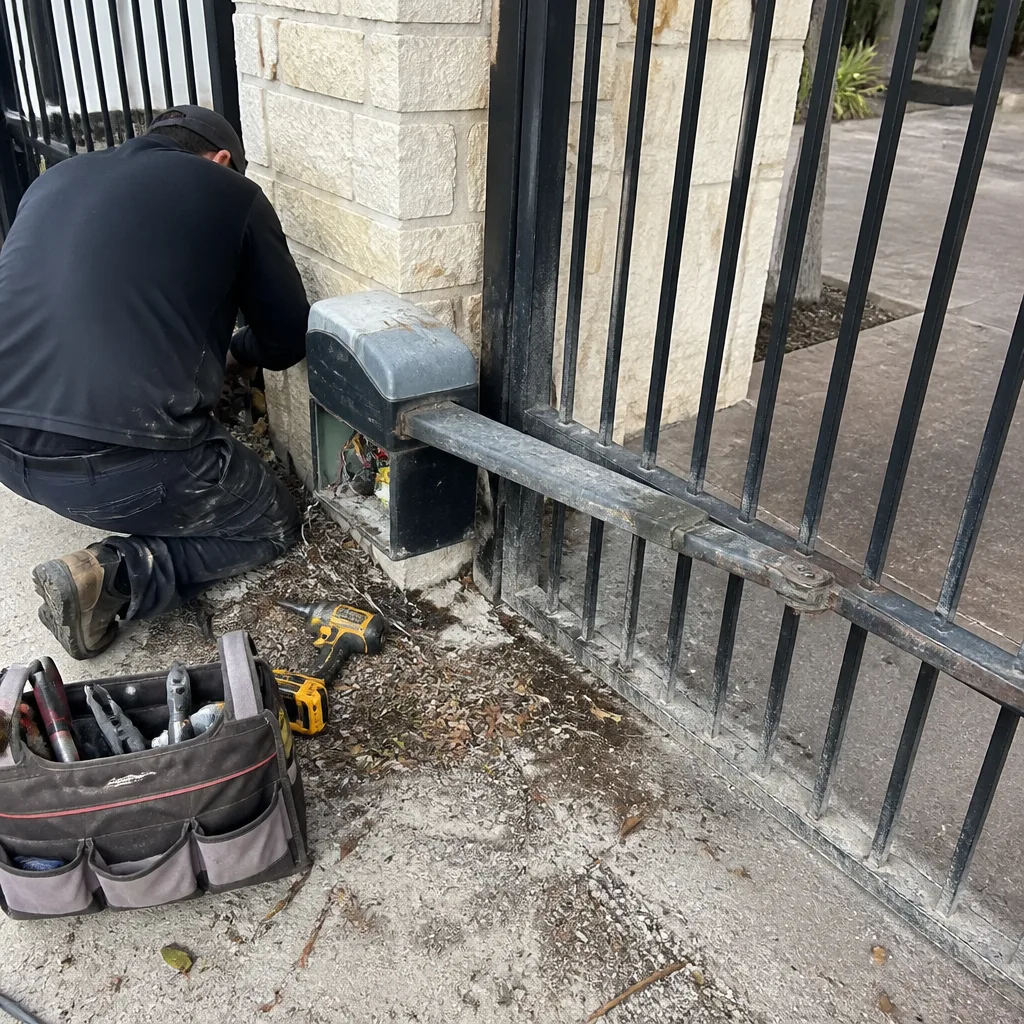 Before
 After
AfterWhen to Call a Professional
Call a professional when the job touches a hardwired 120V circuit, when a post or footing needs replacement, when the gate is being relocated, or when the HOA approval process feels like more than you have time to manage. These are the jobs where the permit risk is real, and where a licensed contractor who does this work every week in San Antonio will save you time and exposure. Calder Gate Repair San Antonio offers free estimates throughout San Antonio and Bexar County, and we’ll tell you on the phone whether your specific job, in your specific neighborhood, needs a city permit or an HOA filing. For how to hire a gate repair contractor in San Antonio: a step-by-step guide, see our blog. Call (361) 314-4803 and you’ll speak to a real person, not a voicemail tree.
Frequently Asked Questions
No, if the replacement uses the same voltage and connection method as the old opener. Yes, if the job involves new electrical work at the panel, a new outlet, a hardwired transformer, or a voltage-class change. When in doubt, call (361) 314-4803 and we’ll help you determine the answer for your specific setup before you spend a dollar.
No. Mechanical hardware like hinges, rollers, brackets, bushings, and springs are routine maintenance items and are not regulated work in San Antonio or Bexar County, with rare exceptions for historic-district properties where exterior appearance changes are governed separately.
Simple residential gate opener circuits typically clear express review in 1 to 3 business days. Standard review runs 5 to 10 business days. The inspection after the work is done adds another 2 to 5 business days in most parts of the city.
A home inspection may flag the unpermitted electrical or structural work, and the buyer’s lender may require the permit to be retroactively filed before closing. Retroactive permits are slower and often carry additional fees, and the delay can put the entire sale at risk. The San Antonio homeowner in the opening of this guide lost three weeks to this exact scenario.
Yes. Properties outside San Antonio city limits but inside Bexar County may follow county permitting rules, which are generally more limited for residential gate work but can differ for electrical installations. Some areas in the extraterritorial jurisdiction have overlapping rules. Your legal address determines which system applies.
That depends entirely on your HOA’s governing documents. Many San Antonio communities require architectural review for gate replacements or style changes, but exempt routine repairs that don’t change the gate’s appearance. HOA review typically takes 2 to 4 weeks and should be completed before any city permit application when a permit is also required.
The Bottom Line
Most gate repairs in San Antonio don’t need a permit, and the few that do are predictable once you know the three triggers: electrical work at the panel, structural work on posts or footings, and relocating or substantially changing the gate. For more guides & resources, visit our blog. HOA review is a separate track that runs parallel to city permits, and in most San Antonio neighborhoods it’s the slower of the two. Pull the permit before the work when one is needed, get a written price before anything starts, and don’t let a contractor’s word on permits be the only thing standing between you and a delayed closing. That’s the whole game, and it’s not a complicated one when the line is drawn clearly.
Written by Nico Alvarez, Owner at Calder Gate Repair San Antonio, serving San Antonio since 2009.